Battery state of health is the most important factor when buying a used EV in NZ. Here's exactly what to check, what numbers mean, and what questions to ask.
If there's one thing that separates a savvy used EV buyer from someone who'll regret their purchase, it's understanding battery health. The battery is the most expensive component in any electric vehicle and unlike a worn clutch or a tired engine, you can't always tell its condition from a test drive.
This guide explains exactly what battery state of health means, how to check it, what the numbers tell you, and what to expect from different models available in New Zealand's used car market.
|
 |
What is battery state of health (SOH)?
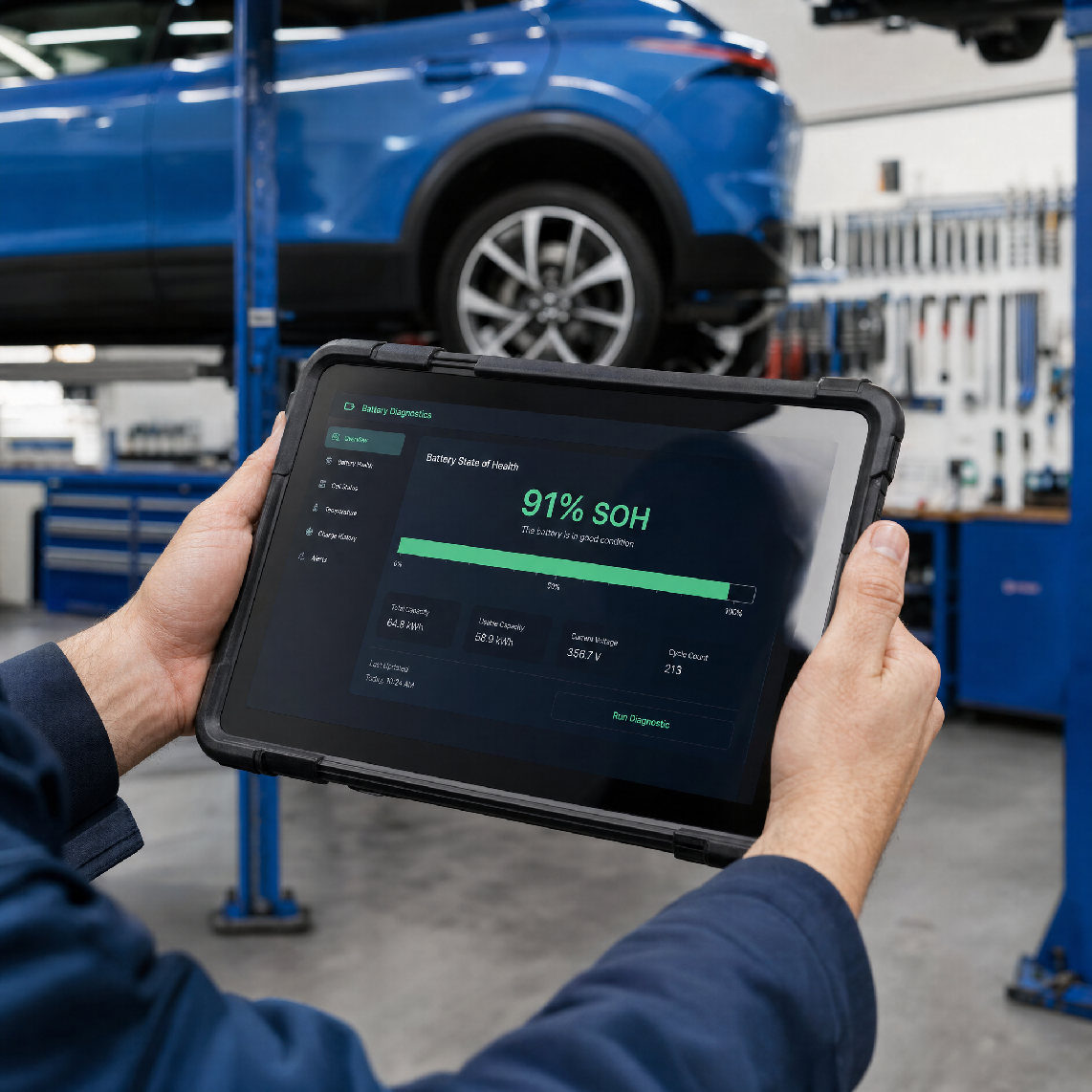
Battery state of health (SOH) is a percentage that represents how much of a battery's original capacity remains. A brand-new EV battery has 100% SOH. As the battery goes through charge cycles over months and years, capacity gradually decreases, this is called degradation.
SOH is different from the current charge level (state of charge, or SOC). SOC tells you how full the battery is right now, like the fuel gauge on a petrol car. SOH tells you the maximum capacity the battery can hold, like the size of the fuel tank shrinking over time.
Why it matters when buying used:
A vehicle with 80% SOH will deliver roughly 80% of its original advertised range. So a Nissan Leaf originally rated at 270km of range might only deliver around 216km in real-world conditions. That may still be perfectly fine for your daily driving but you need to know before you buy.
What causes battery degradation?
EV battery degradation is normal and inevitable, but the rate varies significantly depending on how the vehicle has been used and maintained.
Factors that accelerate degradation:
- Frequent DC fast charging. Rapid charging generates heat, which is harder on battery chemistry over time. Occasional fast charging is fine, using it as your primary charging method accelerates wear.
- Regularly charging to 100%. Most manufacturers recommend keeping daily charging to 80–90% to reduce stress on cells.
- Storing the battery at very low or very high charge levels. Sitting at near-empty or near-full for extended periods degrades cells faster.
- Exposure to heat. Higher ambient temperatures accelerate chemical degradation, relevant for vehicles that have spent time in warmer climates.
- High mileage. More kilometres mean more charge cycles and more natural wear.
Factors that slow degradation:
- Using AC (overnight home) charging as the primary method
- Keeping the charge between 20–80% for daily use
- Moderate mileage with consistent use
- Proper storage at around 50% charge when the vehicle is unused for extended periods
 |
How to check battery SOH when buying used
There are several ways to get a SOH reading, depending on the make and model.
OBD diagnostic tools
A qualified EV technician can connect an OBD2 diagnostic tool to read battery management system data, including precise SOH percentages, individual cell voltages, and any battery fault codes. This is the most accurate method and is included in any reputable pre-purchase inspection.
For Nissan Leafs specifically, the free LeafSpy app (used with a Bluetooth OBD2 adapter) can read detailed battery data. Many sellers of used Leafs will provide a LeafSpy screenshot as part of their listing, if they won't, that's a red flag.
|
On-screen indicators
Some EVs display battery health directly in the instrument cluster or infotainment system. The Nissan Leaf shows a capacity bar display: 12 bars represents full health, and each bar lost represents roughly 6–9% capacity reduction. Ask the seller to show you this before you inspect the vehicle in person.
Manufacturer warranty check
Check whether the battery warranty is still active. Most manufacturers cover battery degradation below 70–75% capacity for 8–10 years. If the vehicle is still within warranty period, you have protection against significant early degradation.
Trusted Third Party Battery Diagnostic Test
The Aviloo Battery Scanner is a world-leading independent EV battery testing system to give you a clear, certified picture of your EV’s battery health. The Aviloo system works with a wide range of models, including Nissan Leaf, Tesla Model 3, Hyundai Kona, Mitsubishi Outlander PHEV, Peugeot e-208/e-2008, Polestar , Mercedes EQA & EQC and many more.
What SOH percentage should you look for?
Here's a practical guide to interpreting SOH readings in the NZ used market:
| SOH |
What it means |
Action |
| 90–100% |
Excellent - minimal degradation |
Buy with confidence |
| 75–89% |
Great- some capacity loss, still very usable |
Suitable for most buyers |
| 60–74% |
Acceptable - some range reduction |
Confirm Range & Warranty |
| Below 60% |
Check for cell imbalance |
Price relative to range |
For most Kiwi daily drivers covering under 50km per day, even an 70% SOH battery will comfortably meet everyday needs. The key is to know the number before you commit to a vehicle.
How long do EV batteries last in New Zealand?
Based on current data from the NZ EV fleet, most modern EV batteries degrade at a rate of roughly 1–3% per year under normal use. That means:
- A 5-year-old EV might have 85–95% SOH
- A 10-year-old EV might have 75–90% SOH
The Nissan Leaf, which dominates the NZ used import market, shows more variability than newer models partly because earlier models lacked active thermal management, making them more sensitive to heat. A 2015–2018 Leaf imported from Japan should be inspected carefully for battery health.
Newer EVs from 2020 onwards, including the Volvo C40, MG ZS EV, Hyundai Ioniq 5, Tesla Model 3, and VW ID.4, use more sophisticated battery management systems and show slower degradation rates.
|
Can you replace an EV battery in New Zealand?
Yes, but it can be expensive. Battery replacement costs in NZ vary by model
Given these costs, battery health is genuinely the most important factor in a used EV purchase. A vehicle priced attractively with poor battery health may cost significantly more to own over time than a slightly more expensive vehicle with a healthy battery.
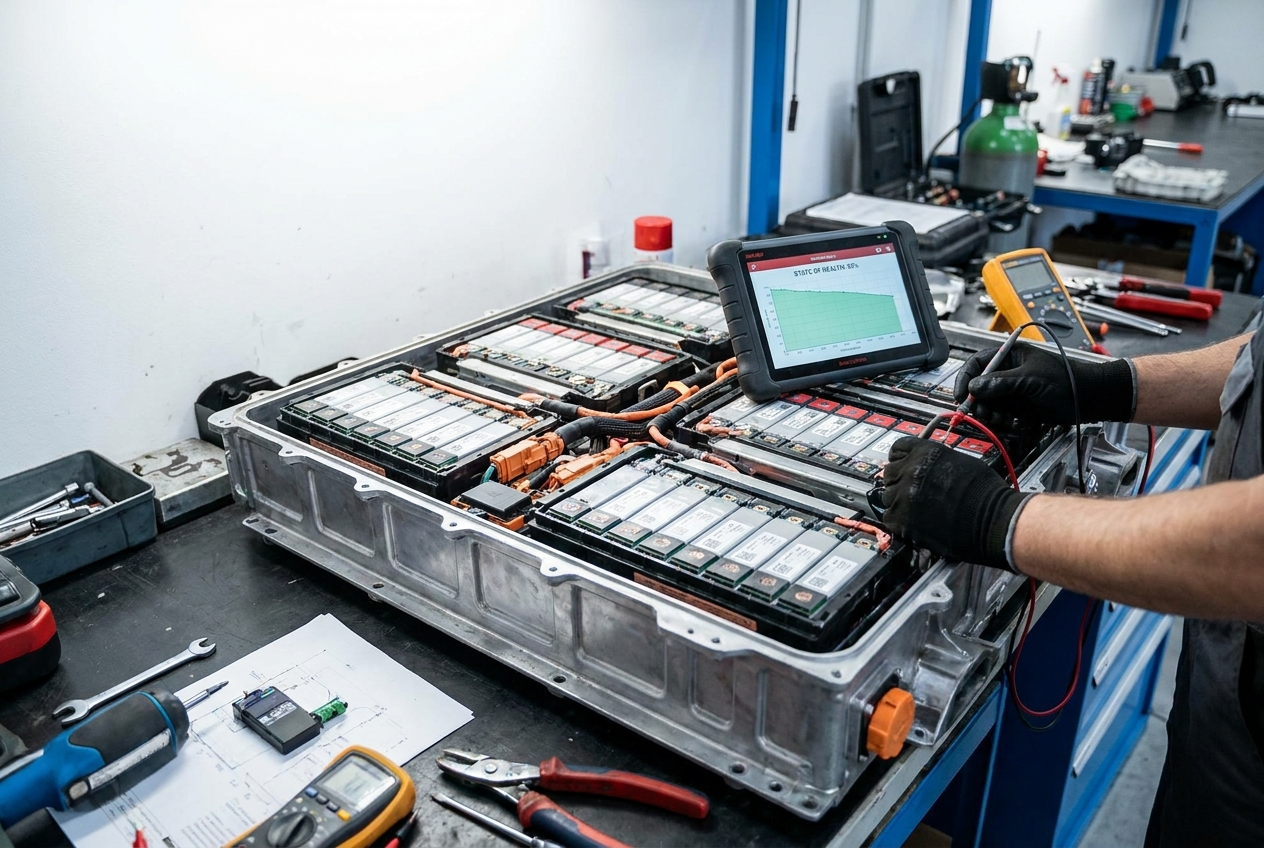
Some specialist EV workshops in New Zealand like the GVI Service Centre now offer battery reconditioned or upgraded replacements for popular models like the Nissan Leaf, worth exploring if you find a great vehicle at a low price with a weak battery.
|
 |
Questions to ask the seller about battery health
Before purchasing any used EV, ask these questions:
- What is the current battery state of health percentage?
- Has the battery ever triggered a warning or fault code?
- Is the battery still covered under the manufacturer's warranty?
If not, what Warranty is available?
- What has been the primary charging method, home AC or public fast charging?
If the seller cannot or will not answer these questions, treat it as a warning sign and factor the uncertainty into your offer.
The bottom line
A healthy battery in a used EV is worth more than a low purchase price with a degraded one. Take the time to check SOH before you buy, use a qualified EV technician for your pre-purchase inspection, and don't be shy about walking away from a vehicle that can't back up its listed range with real battery health data.
Want to know how much a used EV will really cost to own once you drive it off the forecourt? Read our guide to the true cost of owning a used EV in New Zealand.
The content in this post is based on our own research, experience, and opinion and is intended for general informational purposes only. It does not constitute professional financial, technical, or legal advice. While we strive for accuracy, figures, regulations, and specifications referenced — including pricing, RUC rates, battery data, and technology timelines — are subject to change and may vary by circumstance. We encourage readers to conduct their own research and consult qualified professionals before making any significant purchasing or financial decisions. External links and references are provided for convenience and do not constitute endorsement.