EV brakes work differently to petrol car brakes and they need different care. Here's what New Zealand EV owners should know about regenerative braking, brake fluid, and when to get brakes checked.
Ask most EV owners about their brakes and they'll tell you: they barely think about them. Brake pads on electric vehicles last two to three times longer than on petrol cars, sometimes longer. It's one of the quiet benefits of owning an EV.
But "longer lasting" doesn't mean "maintenance-free." EV brakes have some specific characteristics that every New Zealand owner should understand because neglecting them can lead to problems that are easy and cheap to prevent.
|
 |
How braking works differently in an EV
In a conventional petrol car, braking is almost entirely friction-based: presses pad against rotor, kinetic energy converts to heat, vehicle slows. Simple, but wasteful.
Electric vehicles use a two-stage braking system:
Stage 1 — Regenerative braking: When you lift off the accelerator (and in some modes, lightly apply the brake pedal), the electric motor acts as a generator, converting the vehicle's kinetic energy back into electricity and storing it in the battery. This slows the car without touching the friction brakes at all, and simultaneously recovers energy that would otherwise be lost as heat.
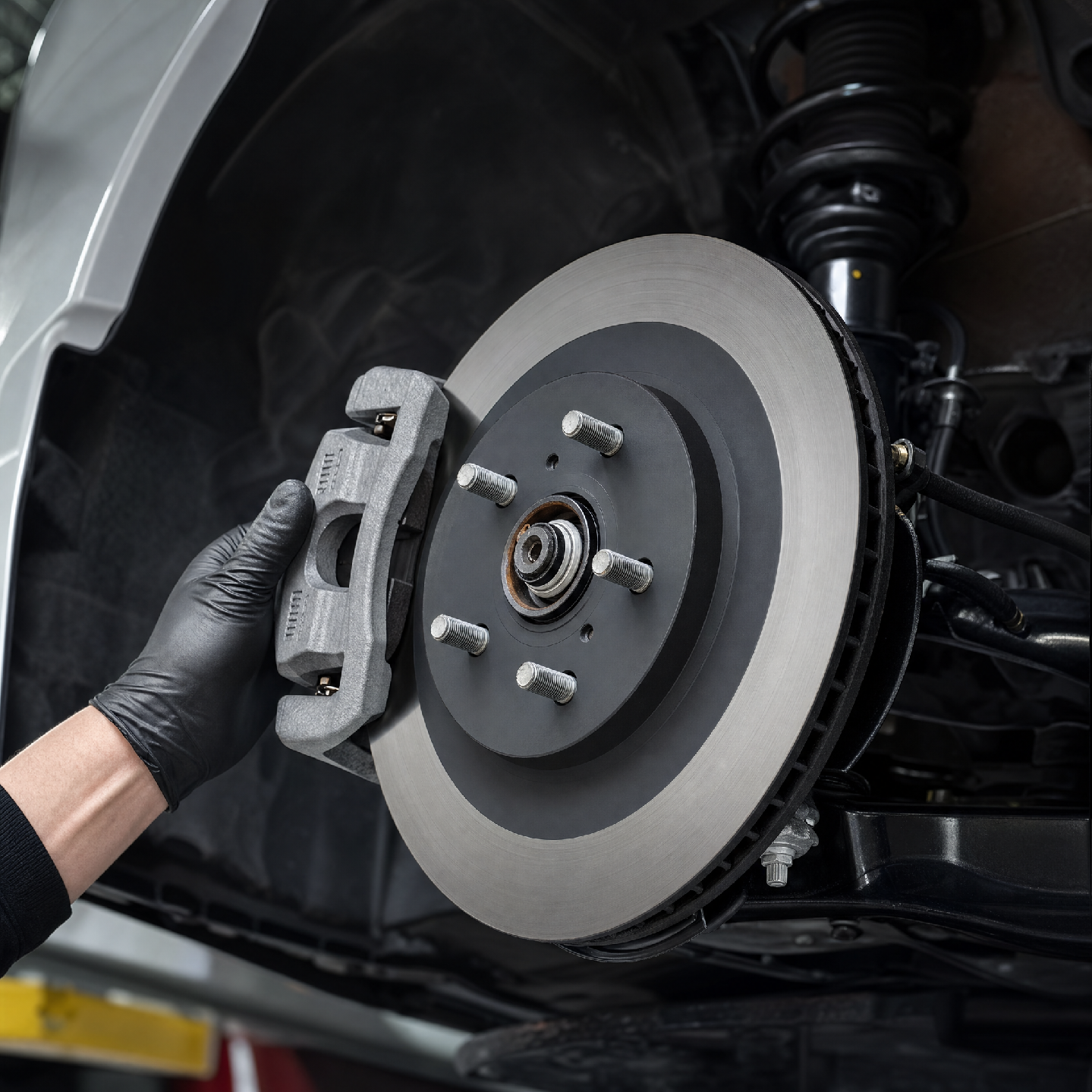
Stage 2 — Friction braking: For harder stops, emergency braking, or when the battery is fully charged and can't accept more energy, the conventional friction brakes engage — pressing the brake pads against the rotors just as in a petrol car.
In everyday driving, regenerative braking handles the vast majority of slowing. Friction brakes are used primarily for hard stops, low-speed manoeuvring, and holding the vehicle stationary.
Why EV brake pads last so long
Because friction brakes are used far less frequently, brake pads on EVs wear at a fraction of the rate of those on petrol vehicles. Many EV owners report 80,000–100,000km or more from a single set of pads.
For comparison, petrol car brake pads typically need replacement every 25,000–60,000km depending on driving style.
The saving is real, a brake pad replacement that costs $400–$800 on a petrol vehicle may not be required for the first six or eight years of EV ownership.
The rotor corrosion problem
Here's the issue: while brake pads are barely wearing, the rotors can deteriorate through a different mechanism, surface rust and corrosion from underuse.
Steel brake rotors need regular contact with brake pads to stay clean and free of oxidisation. On a petrol car, this happens naturally through constant friction braking. On an EV, if the friction brakes are rarely engaged, rotors can develop surface rust, particularly:
- After the vehicle has sat unused for several days
- In coastal environments (common in New Zealand)
- In wet conditions
Light surface rust is normal and usually clears itself after a few firm brake applications. However, persistent or deep corrosion can cause:
- Vibration or juddering through the brake pedal
- Reduced braking efficiency
- Grinding noise when braking
- Uneven rotor wear requiring early replacement
What to do: Periodically use the friction brakes deliberately, a few firm (not emergency) stops during a drive will keep rotor surfaces clean. Your technician should also inspect rotors at every service. Need help or guidence, contact our EV Specialist Team at the GVI Service Centre
Brake fluid: the most commonly overlooked EV maintenance item
This is the brake maintenance item that catches most EV owners out. Brake fluid must be replaced regularly, and the interval is the same for EVs as for petrol vehicles, regardless of how little the friction brakes are used.
Why brake fluid degrades
Brake fluid is hygroscopic, meaning it absorbs moisture from the atmosphere over time. As it absorbs water, its boiling point drops. This matters because during hard braking (emergency stops, steep descents), the friction brakes generate intense heat. If the fluid's boiling point is too low, it can vaporise inside the brake lines causing a spongy or unresponsive brake pedal at the worst possible moment.
EV-specific issue: Because EV friction brakes are rarely used, owners may assume the brake fluid is "fine" and skip this service. The fluid degrades through moisture absorption regardless of whether the brakes are used, so the replacement interval still applies.
Recommended interval: Every 2 years, or as specified by your manufacturer.
Cost in NZ: $80–$150 for a brake fluid replacement.
Wanting to have the brake fluid in your EV changed? Book in with our EV Specialist today -
What a brake inspection covers on an EV
At each annual service, a qualified EV technician should check:
- Brake pad thickness: Even with low wear, pads should be measured and recorded
- Rotor condition: Checking for corrosion, scoring, thickness variation, and minimum thickness
- Brake fluid condition: Testing moisture content with a refractometer or brake fluid test strips
- Brake caliper operation: Checking that calipers are moving freely and not sticking (a stuck caliper can cause uneven pad wear and rotor damage)
- Brake lines and hoses: Checking for corrosion, cracking, or leaks
- Parking brake function: Mechanical or electronic park brake operation
- Regenerative braking calibration: Checking that regen levels are set and functioning correctly
Signs your EV brakes need attention
Even with low wear rates, don't ignore these warning signs:
Grinding or metallic scraping when braking — often rotor corrosion after the vehicle has sat for a few days. If it persists beyond a few brake applications, get it checked.
Vibration or pulsing through the brake pedal — indicates rotor runout (warping) or uneven wear. May require rotor machining or replacement.
The vehicle pulls to one side when braking — suggests uneven brake force, often from a sticking caliper.
Soft or spongy brake pedal — can indicate moisture-contaminated brake fluid, air in the brake lines, or a hydraulic system fault. This is a safety issue, book a service immediately.
Brake warning light — any brake-related warning light should be inspected by a qualified technician without delay.
If you are unsure, book in with our EV Specialists today, we can even arrange to have your vehcile towed
Brake maintenance schedule for NZ EV owners
| Item |
Recommended interval |
| Brake inspection (pads, rotors, calipers) |
Every 12 months |
| Brake fluid replacement |
Every 2 years |
| Brake pad replacement |
Every 80,000–100,000km (varies) |
| Rotor replacement |
As required (inspect annually) |
Frequently asked questions
Do regenerative brakes feel different from normal brakes?
Yes, especially if you set a high regeneration level. The car begins slowing as soon as you lift off the accelerator. Many EV drivers learn one-pedal driving — accelerating and decelerating almost entirely with the accelerator, rarely touching the brake pedal. It takes a short adjustment period but becomes second nature quickly.
Can any mechanic work on EV brakes?
The friction brake components (pads, rotors, calipers, brake fluid) can generally be worked on by any qualified mechanic. The regenerative braking system, however, interfaces with the high-voltage system and motor controller — that part of the inspection should only be carried out by a technician with EV/HV vehicle qualifications.
Does NZ's wet weather affect EV brake maintenance?
Yes. New Zealand's coastal regions and regular rainfall make rotor corrosion more of an issue than in dry climates. If your EV sits unused for extended periods, expect to find surface rust on the rotors and make a point of using the friction brakes deliberately to clean them off when you return to driving.
EV brakes are one of the great low-maintenance benefits of electric vehicle ownership, but they still need proper care. Annual inspection and two-yearly brake fluid replacement are the key items to stay on top of.
If you'd like to book an EV service that includes a comprehensive brake inspection, get in touch with our team. We service all makes of electric vehicle and can advise on the right maintenance schedule for your model.
The GVI Service Centre are Electric Vehicle Service Specialists - Contact the team today
The content in this post is based on our own research, experience, and opinion and is intended for general informational purposes only. It does not constitute professional financial, technical, or legal advice. While we strive for accuracy, figures, regulations, and specifications referenced — including pricing, RUC rates, battery data, and technology timelines — are subject to change and may vary by circumstance. We encourage readers to conduct their own research and consult qualified professionals before making any significant purchasing or financial decisions. External links and references are provided for convenience and do not constitute endorsement.
Last updated: June 2026