Cold weather reduces EV range, but far less than most people think, and there's plenty you can do about it. Here's a practical guide to winter EV driving in New Zealand
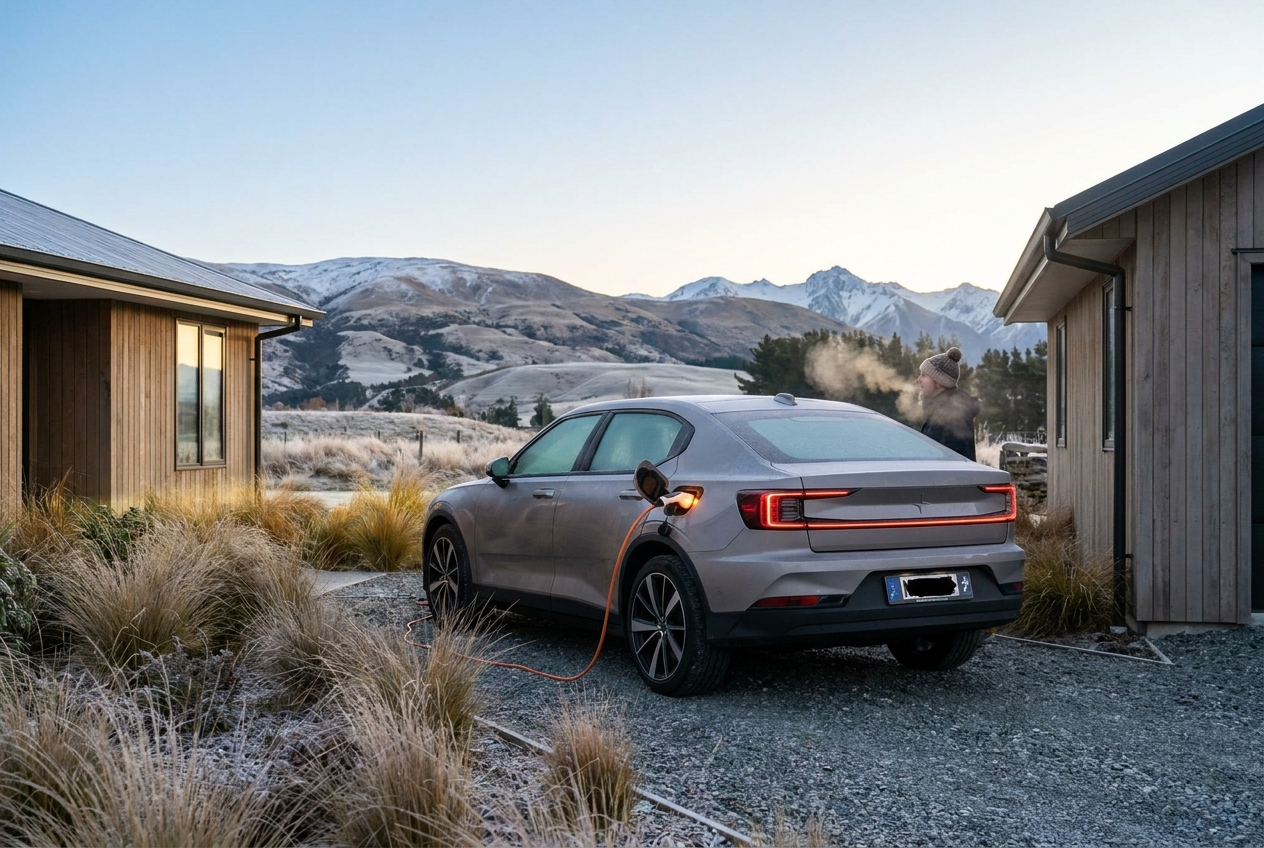
Every EV owner notices it: the first genuinely cold morning of the year, the range estimate looks lower than usual. Cold weather does reduce EV range, that part is true, and there's no point pretending otherwise. But "loses half its range in winter" is a myth, and with a few simple habits you can claw back most of the difference.
Here's a practical guide to getting the most from your EV through a New Zealand winter, particularly relevant if you're in the South Island or anywhere that sees genuinely cold mornings.
Why cold weather reduces range
There are two separate things going on, and understanding both helps you manage them.
1. The battery chemistry slows down. Lithium-ion batteries rely on ions moving through a liquid electrolyte, and that movement is literally slower when cold. A cold battery can't deliver or accept energy as readily, which temporarily reduces both available capacity and charging speed. Importantly, this energy isn't lost, it becomes accessible again as the battery warms up. But on a cold day, your usable range drops.
2. Cabin heating draws real power. In a petrol car, cabin heat is essentially free, it's waste heat from the engine. An EV has no engine producing waste heat, so it has to generate warmth using energy from the battery. On a cold day, heating the cabin can be one of the single biggest drains on your range.
Together, these effects typically reduce real-world range by around 15-25% in genuinely cold conditions, noticeable, but a long way from useless.
Tip 1: Precondition while still plugged in
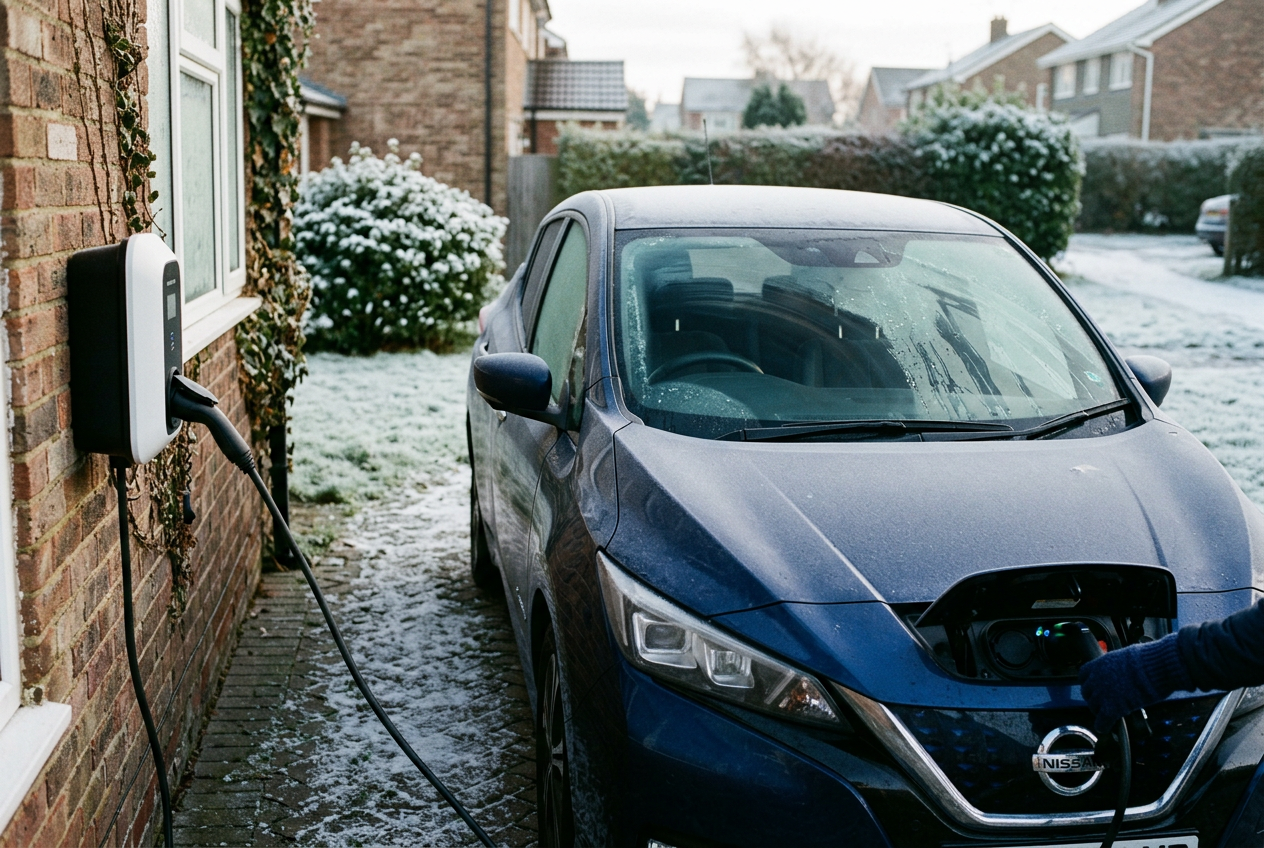
This is the single most effective thing you can do, and it directly tackles the biggest winter energy drain.
Preconditioning means warming the cabin (and on many EVs, the battery itself) before you set off, while the car is still plugged into the charger. Because the energy comes from the grid rather than the battery, you set off with a warm cabin, a warm battery, and a full charge unaffected by the heating.
Most modern EVs let you schedule preconditioning through an app or the car's settings, set your departure time, and the car is warm and ready exactly when you need it. On a frosty New Zealand morning, this also means you get in to a defrosted windscreen without scraping, which is a genuine quality-of-life bonus.
The key is that this only works while plugged in. Wait until you're driving to turn on the heat, and that energy comes straight out of your range.
Tip 2: Understand heat pump vs resistive heating
Not all EV heating systems are equal, and this is worth understanding when buying, particularly a used EV.
Resistive heating works like an electric bar heater, it passes current through an element to generate heat. Simple and effective, but energy-hungry. Older and cheaper EVs typically use resistive heating.
Heat pump heating works like a reverse air conditioner, moving heat rather than generating it from scratch. It can be several times more efficient than resistive heating in moderate cold, using far less battery energy for the same cabin warmth. Many newer and higher-spec EVs include a heat pump.
If you're buying a used EV and winter range matters to you, check whether it has a heat pump, it makes a meaningful difference to cold-weather efficiency. If your EV has resistive heating, the other tips in this guide matter even more.
Tip 3: Use seat and steering wheel heaters
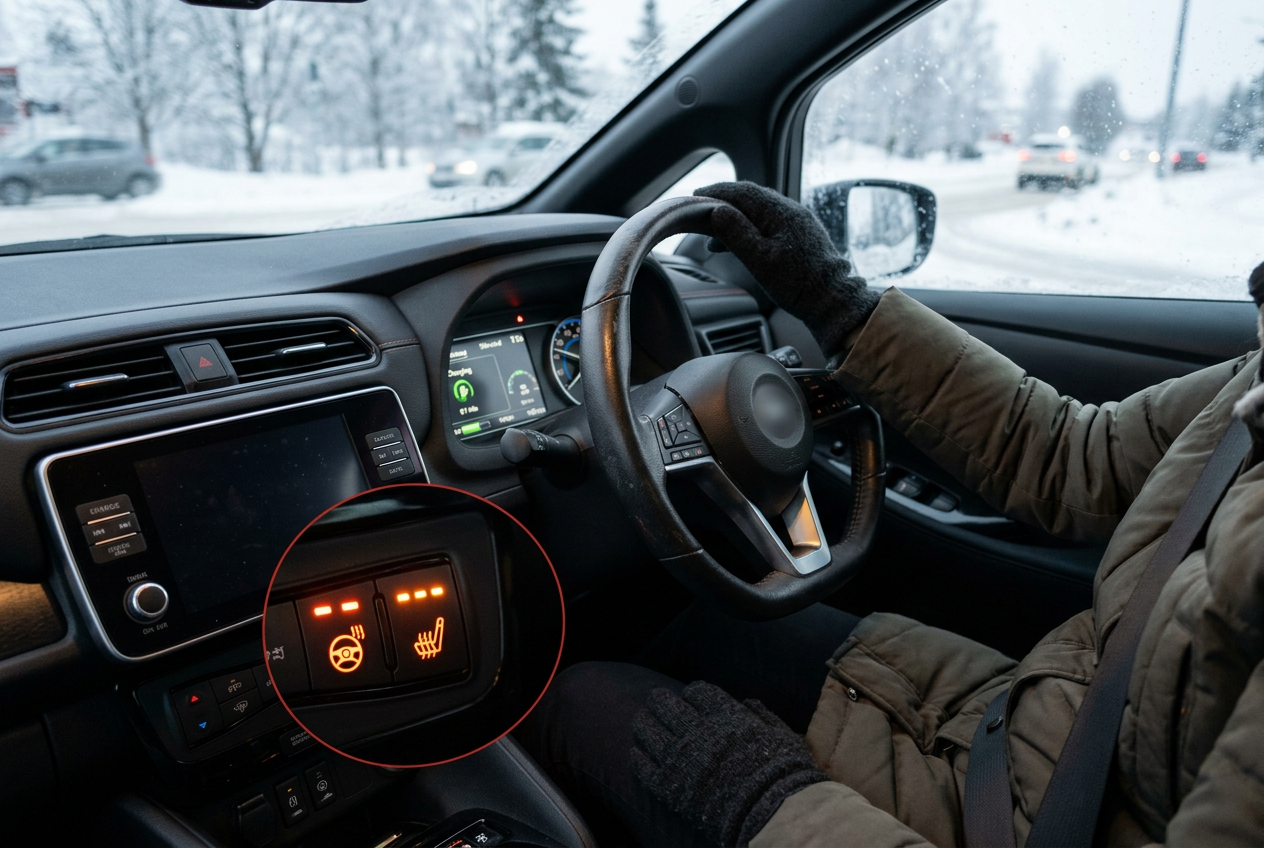
This is a simple but genuinely effective trick. Heating the whole cabin air is energy-intensive; heating you directly is far more efficient.
Seat heaters and a heated steering wheel warm you at the points of contact using a fraction of the energy required to heat the entire cabin. On many EVs you can keep the cabin air heating modest and rely more on these contact heaters to stay comfortable, meaningfully extending your winter range without feeling cold.
Many EV owners in cold climates run this as their default winter setup: seat and wheel heaters on, cabin air heating turned down. It's one of the easiest habits to adopt and the range saving is real.
Tip 4: Keep an eye on tyre pressure
Cold air contracts, which means tyre pressures drop in winter, and underinflated tyres increase rolling resistance, costing you range on top of the cold-weather losses you're already managing.
Check your tyre pressures more regularly through winter, always when the tyres are cold (the vehicle hasn't been driven for a couple of hours), and inflate to the recommended pressure on your driver's door placard. It's a free, five-minute job that protects both your range and your tyre life. Many EVs display live tyre pressures on the dashboard, making it easy to keep an eye on.
Tip 5: Plan for slower charging in the cold
Cold affects charging as well as driving. A cold battery can't accept charge as quickly, so DC fast charging in winter can be noticeably slower, particularly if you arrive at a charger with a cold battery after a long highway run in freezing conditions.
The solution is battery preconditioning. Many EVs will automatically warm the battery to its optimal charging temperature as you navigate toward a fast charger, so it's ready to accept full charge speed when you plug in. If your EV has this feature, using the built-in navigation to route to a charger usually triggers it automatically. If it doesn't, simply be aware that winter fast charging may take a little longer and factor that into your trip planning.
For home AC charging overnight, cold has much less impact, the slower charge rate gives the battery time to manage its own temperature, so overnight charging remains reliable through winter.
Tip 6: Give yourself more margin
The simplest winter habit of all: build in a bigger buffer. If you'd normally be comfortable arriving somewhere with 10% charge, aim for 20% in winter. The reduced range and slower charging mean the margins are tighter, so a little extra planning goes a long way.
Don't plan winter trips around 100% of your rated range, that figure is measured in mild conditions and won't reflect a cold South Island morning. Plan around real-world winter range, keep a comfortable buffer, and winter driving becomes completely routine.
South Island and alpine considerations
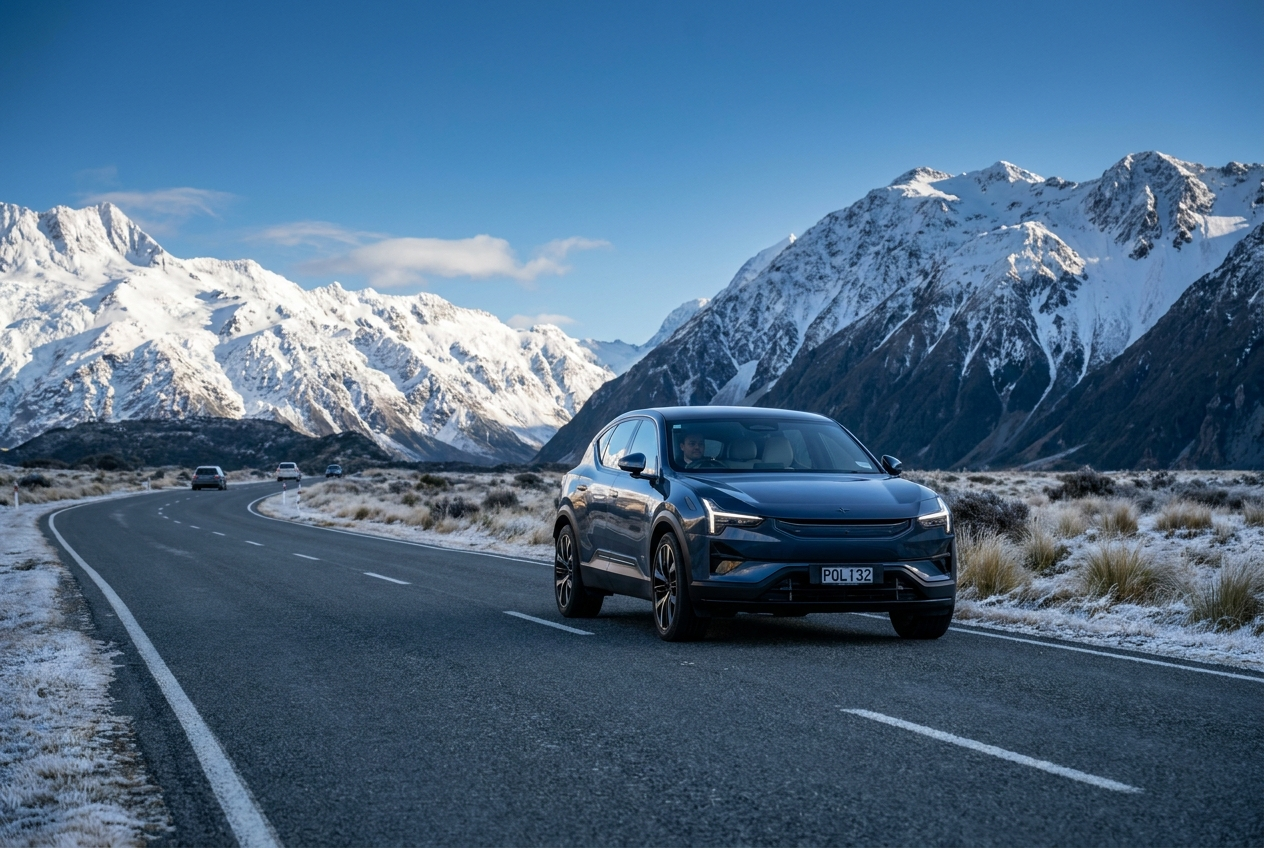
For drivers in genuinely cold parts of New Zealand, Central Otago, the Mackenzie Country, alpine roads, a few extra points:
- The cold-weather range reduction will be at the higher end of the 15-25% range on the coldest days. Plan accordingly.
- Preconditioning matters even more, a cold-soaked battery overnight in sub-zero temperatures benefits significantly from being warmed while plugged in before departure.
- If you're heading somewhere without reliable charging, treat your usable winter range conservatively and know your charging options before you set off.
- Garaging your EV overnight, where possible, keeps the battery warmer and reduces the morning warm-up energy required.
The reassuring bit
Winter EV driving sounds more daunting than it is. Yes, you'll see a lower range figure on cold days. But between preconditioning while plugged in, using contact heaters, keeping tyres inflated, and building in a sensible buffer, most New Zealand EV owners find winter to be a minor seasonal adjustment rather than a genuine problem.
And there's a genuine upside worth remembering: on a freezing morning, an EV that's been preconditioned while plugged in is warm, defrosted, and ready to go the moment you get in, no scraping the windscreen, no sitting in a cold car waiting for the engine to warm up. Once you've experienced that on a frosty winter morning, it's hard to go back.
Disclaimer
The content in this post is based on our own research, experience, and publicly available information and is intended for general informational purposes only. It does not constitute professional technical advice. Cold-weather range impact varies significantly between vehicle makes, models, battery chemistry, and specific conditions. We encourage readers to consult their vehicle's manufacturer documentation for model-specific guidance.