Should you install a wallbox charger or use a standard plug to charge your EV at home in NZ? Here's what it costs, how long it takes, and what you need to know before installing.
For most New Zealand EV owners, home charging is the foundation of daily life with an electric vehicle. You plug in when you get home, wake up to a full charge, and don't think about fuel stations most days of the week.
But how you set up home charging matters, and the difference between a standard household plug and a dedicated wallbox charger is more significant than many buyers realise. This guide covers your options, what they cost, and how to get the setup right.
|
 |
Your two home charging options
Option 1: Standard 10-amp household plug (3-pin)
Every EV comes with a cable that allows you to charge from a standard New Zealand 10-amp power point, the same socket you plug your toaster into.
What you get:
- Charging rate: approximately 2.3kW
- Range added: roughly 10–14km per hour of charging
- Time to charge a 30kWh battery from near empty: 15 hours
When it works: A standard plug is fine for most EV owners. If you drive 20–60km a day and can leave the car plugged in overnight for long periods, it can usually keep up. It's also useful for EV owners who are temporarily without a wallbox, or who occasionally charge at a holiday home.
When it doesn't work: If you regularly drive more than 60km per day, a standard plug won't fully replenish overnight. And if you forget to plug in, you could find yourself short of range in the morning.
One important warning: Continuous high-load charging from a standard 10-amp socket can be hard on older or lower-rated household wiring. Have an electrician check your circuit before relying on overnight standard plug charging, particularly in older New Zealand homes.
Option 2: Dedicated Level 2 wallbox charger (recommended)
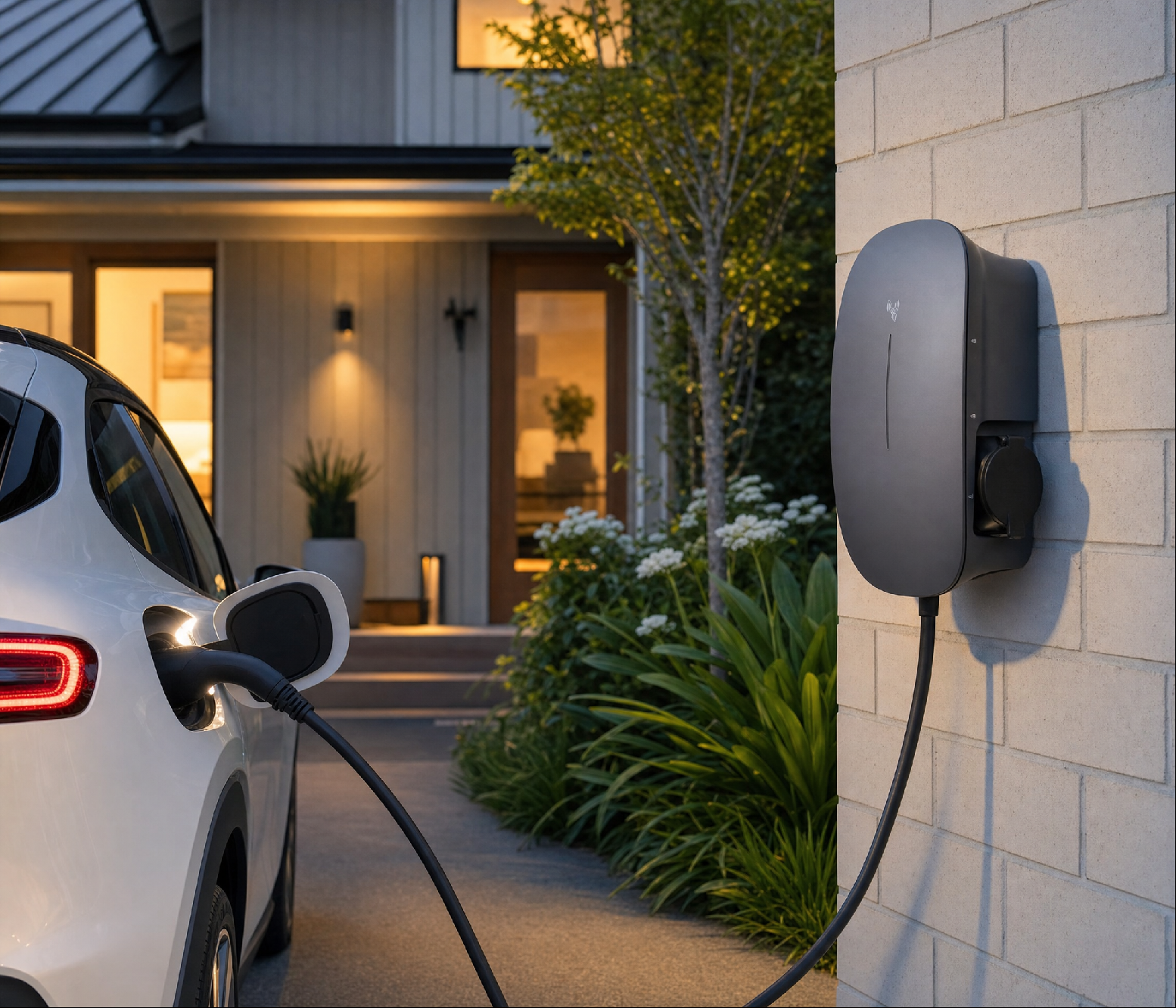
A Level 2 wallbox is a dedicated charging unit hard-wired to your home's electrical system at 240V. This is the right setup for the vast majority of New Zealand EV owners.
What you get:
- Charging rate: 7.2kW (single phase, most NZ homes) up to 22kW (three phase)
- Range added: 40–100km per hour of charging (depending on vehicle)
- Time to charge a 60kWh battery from near empty: 8–10 hours (overnight)
Why it's recommended: A wallbox comfortably tops up any EV overnight, even if you've done a long day's driving. At off-peak electricity rates, overnight charging is the cheapest way to power your EV, typically $3–4 per 100km.
Wallboxes also include safety protections, earth fault detection, surge protection, and load management that aren't standard in all 3 pin charging plugs
What does a wallbox installation cost in New Zealand?
Hardware (wallbox unit): $800–$1,800 depending on brand and features. One of the most popular and trusted EV charging brands in New Zealand is EV Power from OEM Audio. Thye have been supplying EV chargers since EVS first became avaiable in New Zealand
Installation by a registered electrician: $400–$900 depending on complexity. Factors that affect cost:
- Distance from your switchboard to the installation location
- Whether a new dedicated circuit is required
- Access and cable routing (garage, carport, outside wall)
- Whether your switchboard needs an upgrade
Total installed cost: $1,200–$2,500 for a standard residential installation.
Important: EV wallbox installation must be carried out by a registered electrician in New Zealand. This is not a DIY job! it involves work on your home's electrical mains.
Three-phase charging: is it worth it for home use?
Most New Zealand homes are connected to single-phase power, which limits wallbox charging to 7.2kW. This is sufficient for overnight charging for most drivers.
Three-phase power (available in some newer homes and businesses) can support wallbox chargers up to 22kW, cutting charge times to around 3 hours for a full charge. However, most EVs limit AC charging to 7.2–11kW anyway so a 22kW wallbox only benefits vehicles that can accept higher AC charge rates (some later model european models and commercial EVs).
For most NZ homeowners, a 7.2kW single-phase wallbox is the right choice. If you have three-phase and want future flexibility, a 22kW wallbox is worth considering.
Choosing the right wallbox for your EV
Things to look for when selecting a wallbox for NZ use:
Un-Tethered Waxxbox Unit: Being un-tethered or BYOC (Bring your own cable) means you can plug either a TYpe 1 or Type 2 cable into the wall box. Meaning you can charge all EVs off the same box no matter what plug type or brand of vehicle
Smart charging features: Many modern wallboxes connect to Wi-Fi and allow you to schedule charging for off-peak electricity rates, monitor energy use, and adjust charge limits remotely. If you're on a time-of-use electricity plan, this pays for itself quickly.
Dynamic Load Balancing (DLB): Some wallboxes can sense when other high-draw appliances are running (oven, heat pump) and reduce charging speed temporarily to avoid tripping your main circuit breaker.
Weatherproofing: For outdoor installations (carports, external walls), look for an IP54 or higher weatherproofing rating.
Brand support in NZ: Confirm that your chosen brand has service support and spare parts availability in New Zealand, like EV Power with their trusted national support and installer network
Off-peak charging: maximising savings
Electricity is cheapest overnight, typically between 9pm and 7am on most NZ electricity plans. Charging during these hours costs significantly less per kWh than daytime rates.
Most smart wallboxes and EVs allow you to schedule charging to start at a set time, so you can plug in when you get home and the car won't start charging until your off-peak window begins.
On a typical NZ electricity tariff, the difference between peak and off-peak rates is 8–15 cents/kWh. For a 60kWh charge, that's a saving of $5–$9 per full charge — around $200–$400 per year for an average driver.
Solar and EV charging
If you have solar panels, your EV can effectively be charged on free sunlight during daytime hours.
A typical 6kW solar system in New Zealand can generate enough excess power on sunny days to add 30–50km of EV range — making solar and EVs a genuinely powerful combination for reducing household energy costs.
Frequently asked questions
Can I charge my EV in the rain? Yes. EV charging systems are weatherproof and designed to be safe in all weather conditions. The charging port and connector are sealed when in use. A wallbox installed for outdoor use will be rated for NZ weather.
Do I need a special electricity plan for my EV? Not necessarily but it's worth shopping around. Several NZ electricity retailers offer EV-specific plans with cheaper overnight rates. Compare options at Consumer NZ or use a comparison tool.
Will charging an EV significantly increase my power bill? Expect your electricity bill to increase by $50–$100/month for a typical driver, but this is offset by eliminating petrol costs entirely. Net household transport costs for most EV owners go down, often significantly.
Can I charge my EV at my rental property? This is increasingly common. Many rental property owners are willing to allow wallbox installation, particularly if the tenant covers the installation cost. Some landlords are proactively installing wallboxes as a selling point. Check your tenancy agreement and discuss with your landlord.
Setting up home charging properly is one of the best investments you can make as an EV owner. A quality wallbox installation costs $1,200–$2,500 and will pay for itself in convenience and savings within a year or two of ownership.
If you're purchasing a used EV and want advice on home charging setup, or if you have questions about EV servicing and ownership in New Zealand, our GVI team is happy to help.
The content in this post is based on our own research, experience, and opinion and is intended for general informational purposes only. It does not constitute professional financial, technical, or legal advice. While we strive for accuracy, figures, regulations, and specifications referenced — including pricing, RUC rates, battery data, and technology timelines — are subject to change and may vary by circumstance. We encourage readers to conduct their own research and consult qualified professionals before making any significant purchasing or financial decisions. External links and references are provided for convenience and do not constitute endorsement.
Last updated: June 2026