How does an EV battery actually hold energy, and release it on demand? Here's a plain-English explanation of the electrochemistry behind lithium-ion batteries, from individual cells to full packs.
Your EV's battery doesn't store electricity the way a bucket stores water. It stores energy in chemical form, locking it into molecular bonds during charging, then releasing it by reversing those bonds during use. The process is elegant, precise, and happens billions of times at a microscopic level every time you drive.
Understanding how this works helps explain why batteries degrade, why temperature affects range, why fast charging has limits, and why some battery chemistries last longer than others. Here's the science, in plain English.
The fundamental principle: chemistry as energy storage
All batteries, from the AA in your TV remote to the 82kWh pack under a VW ID.4, work on the same basic principle: they store energy by driving a chemical reaction in one direction during charging, then release that energy by allowing the reaction to run in reverse during use.
The specific chemicals used determine the battery's voltage, energy density, how many times the reaction can be reversed before the materials degrade, and how safely it can operate under stress. In electric vehicles, the dominant technology is lithium-ion, a family of battery chemistries that use lithium ions as the active carrier of energy within the cell.
Inside a single lithium-ion cell
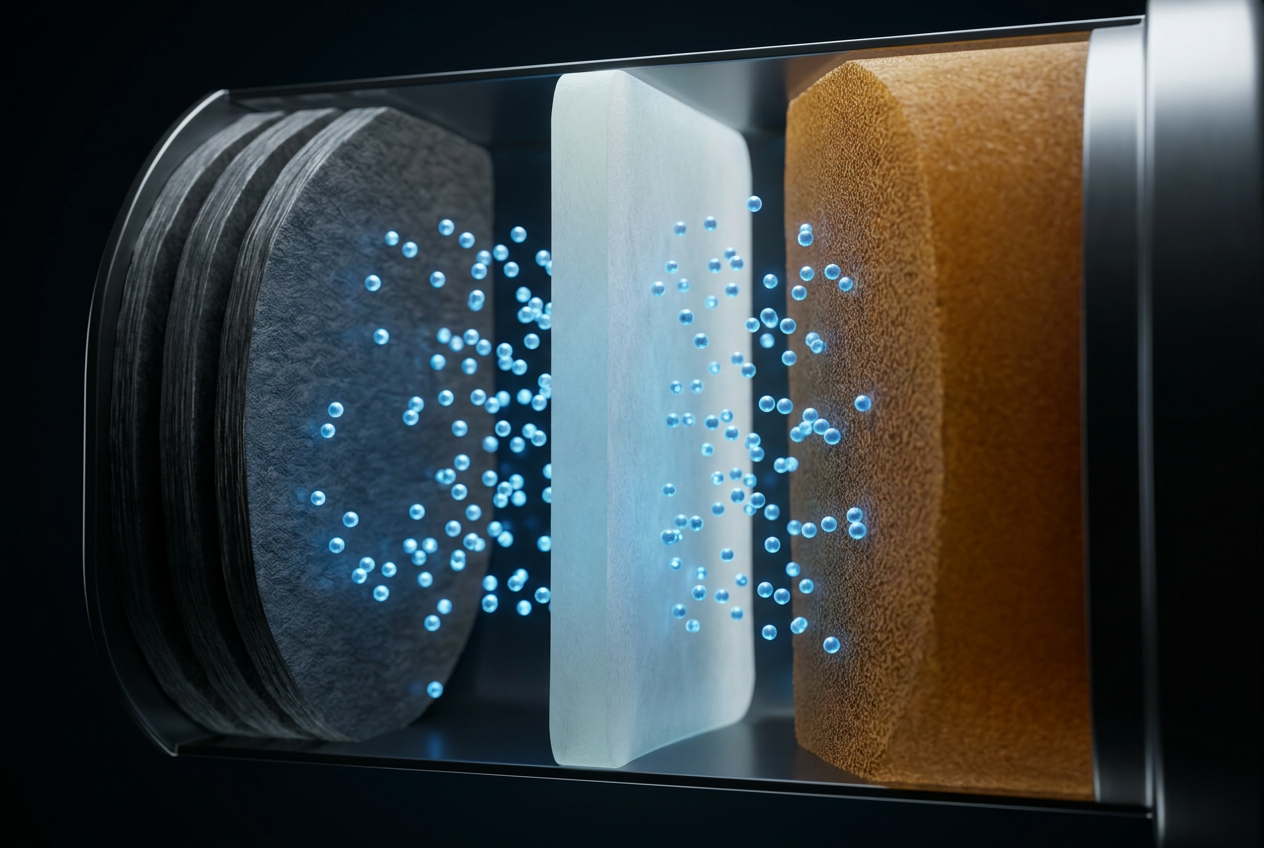
Every lithium-ion cell, regardless of whether it's cylindrical, prismatic, or pouch format, contains the same four fundamental components:
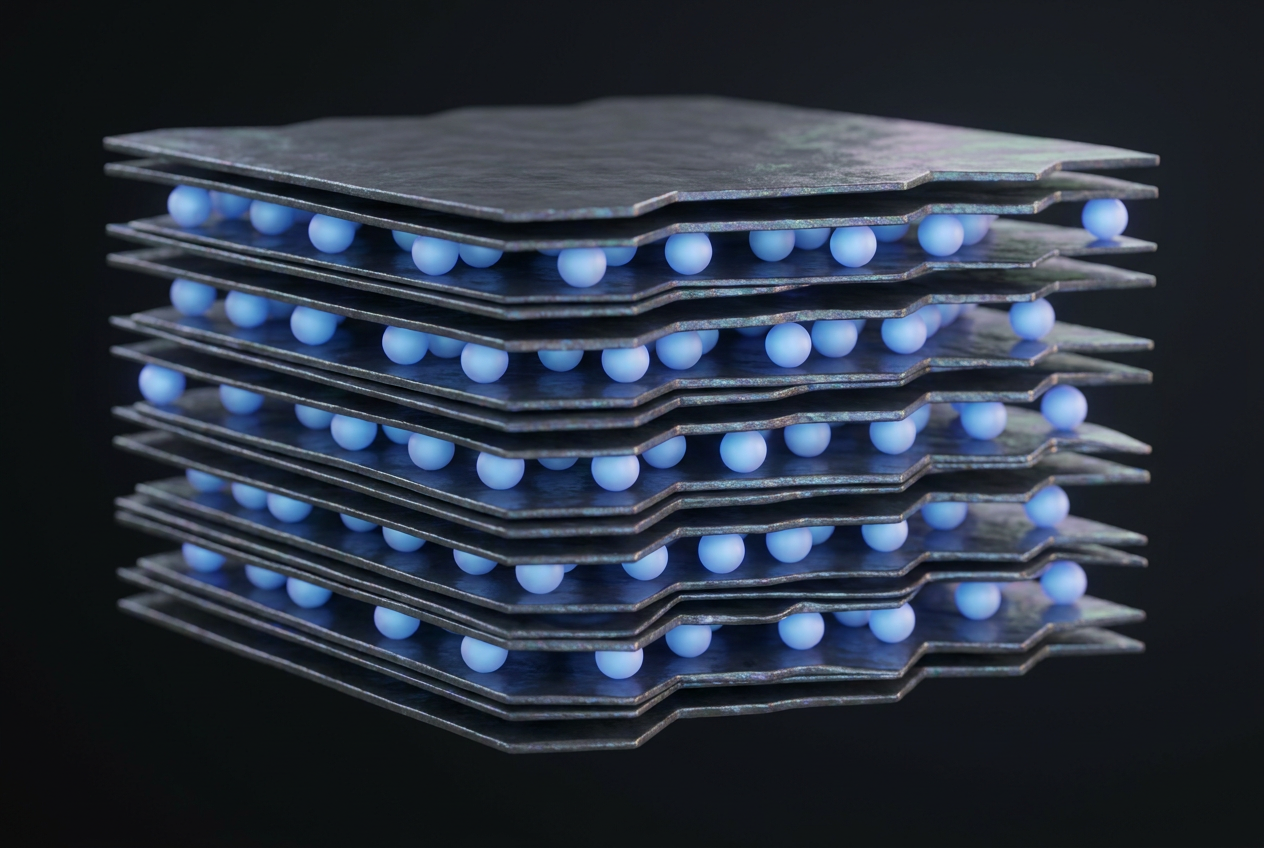
The anode (negative electrode) The anode is typically composed of graphite, a cheap, energy-dense, and long-lasting material that excels at storing energy. Graphite has a layered crystal structure with gaps between the layers, perfect for accommodating lithium ions, which slot in between the graphite layers during charging in a process called intercalation. Think of it like a stack of books with bookmarks being inserted between the pages.
Some newer anodes incorporate silicon alongside graphite, silicon can store significantly more lithium ions than graphite alone, increasing energy density. The challenge is that silicon expands dramatically (up to 300%) when absorbing lithium ions, which causes mechanical stress and eventual cracking. Managing this expansion is one of the key engineering challenges in next-generation cell design.
The cathode (positive electrode) The cathode is where the lithium ions are stored when the battery is at rest or being discharged. The specific cathode material is what defines the battery's chemistry, and is the primary difference between LFP, NMC, NCA, and other lithium-ion variants. Each cathode material has a different crystal structure that accommodates lithium ions differently, producing different trade-offs in energy density, thermal stability, and cycle life.

In NMC (nickel manganese cobalt) cathodes, lithium ions are stored within a layered oxide structure containing nickel, manganese, and cobalt. In LFP (lithium iron phosphate) cathodes, the olivine crystal structure of iron phosphate provides an exceptionally stable home for lithium ions, which is why LFP batteries are so thermally stable and long-lived.
The electrolyte The electrolyte is a fluid that allows lithium ions to flow between electrodes. In conventional lithium-ion cells, this is a liquid solution, typically lithium salts dissolved in an organic solvent. The electrolyte conducts ions but not electrons, which is critical: electrons must travel through the external circuit (through the motor, to do useful work), while ions travel through the electrolyte internally.
The liquid electrolyte is also the component that makes conventional lithium-ion cells flammable under extreme abuse conditions, which is one of the key motivations behind solid-state battery development, where the liquid is replaced with a solid ionic conductor.
The separator The separator is a layer that prevents the electrodes from touching. Direct contact between anode and cathode would cause a short circuit and potentially a thermal event. The separator is a thin, porous membrane that allows lithium ions to pass through freely while keeping the electrodes physically isolated. If a battery is mechanically damaged and the separator fails, the result is a direct short circuit, the rapid energy release that produces the dramatic fires occasionally associated with severely damaged EV batteries.
How energy is stored during charging
During the charging cycle, an electric current introduced via an external source separates the electrons from the lithium atoms in the cathode. The electrons flow around an outside circuit to the anode, which is typically composed of graphite, while the ionised lithium atoms flow to the anode through the electrolyte and are reunited with their electrons.
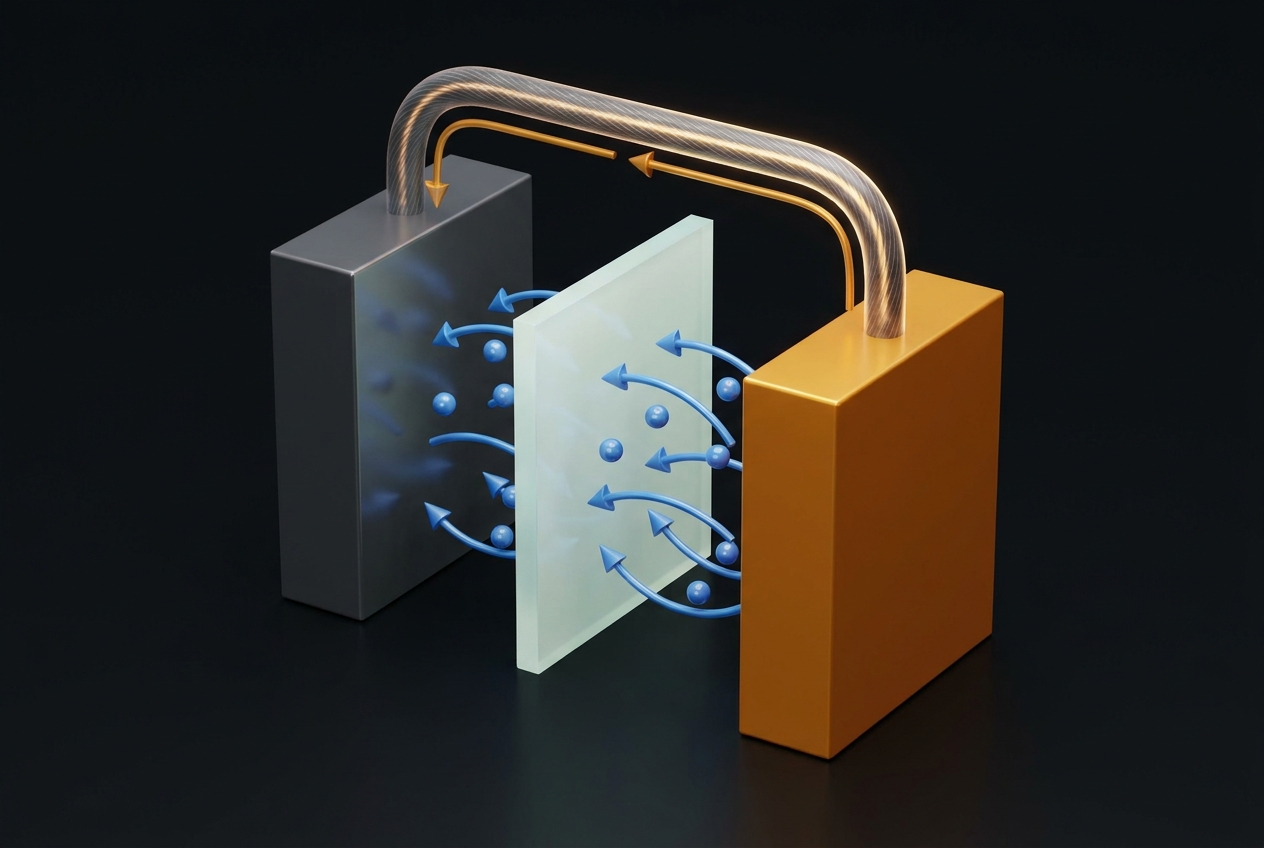
In simpler terms: charging forces lithium ions out of the cathode and drives them through the electrolyte to be stored in the anode. The electrons that were separated from those lithium atoms flow through the external charging circuit, that's the electrical current your charger is pushing into the battery.
Energy is stored in the chemical bonds formed when lithium ions slot into the anode's graphite structure. The battery is now holding energy in chemical form, waiting to be released.
How energy is released during driving
During discharge cycles, the process reverses. Lithium atoms in the anode get separated from their electrons again; the ions pass through the electrolyte; and the electrons flow through the outside circuit, which powers the motor.
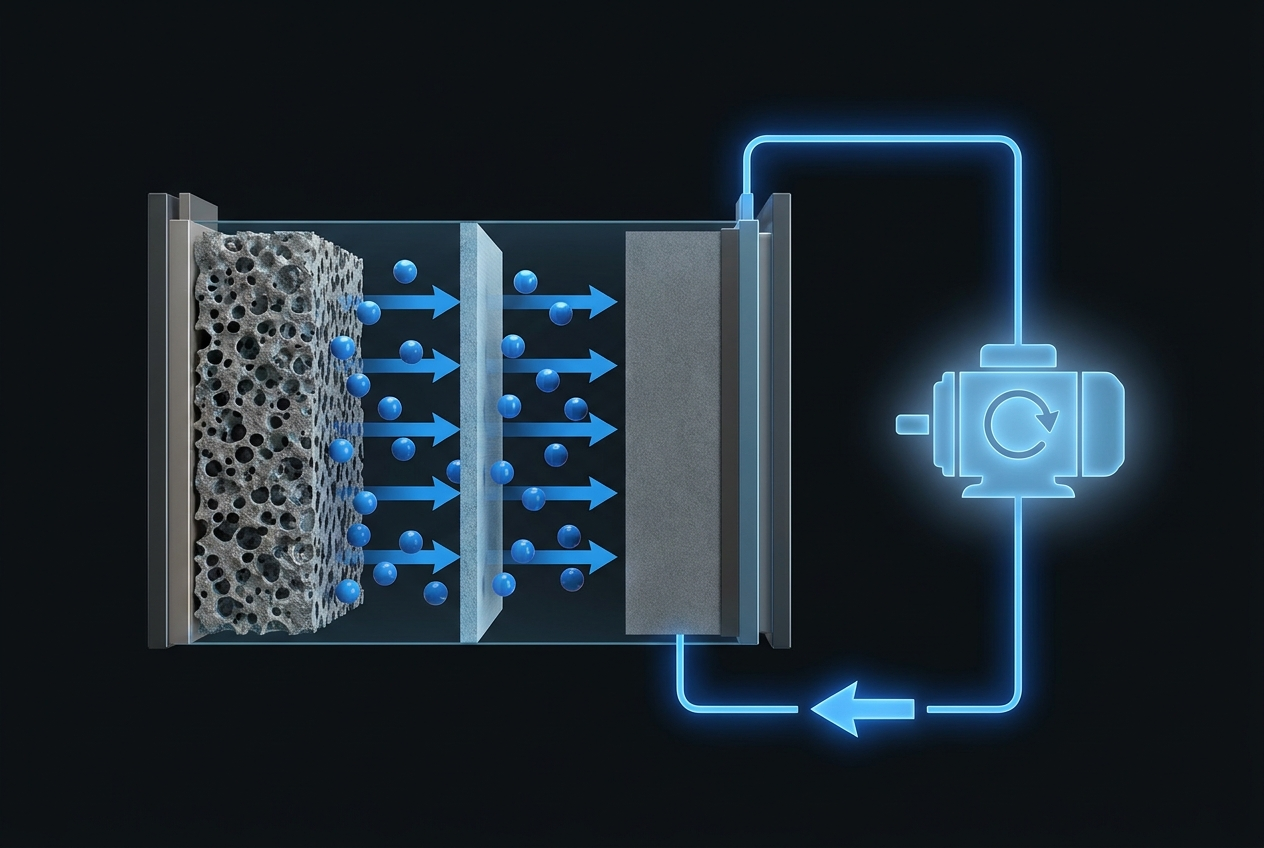
The lithium ions flow back toward the cathode through the electrolyte, but their electrons can't follow the same path. Instead, the electrons must travel through the external circuit, through the vehicle's inverter and electric motor. That flow of electrons through the motor windings is what creates the electromagnetic force that makes the motor spin and drives the wheels.
The driving force behind all of this is thermodynamics: the lithium ions at the anode are in a higher energy state than at the cathode, and chemistry naturally wants to return to the lower energy state. The battery harnesses that chemical preference and forces the electrons to do useful work on their way to equilibrium.
From individual cell to battery pack, how capacity scales
A single lithium-ion cell produces approximately 3.2–4.2 volts and stores a relatively small amount of energy, a typical EV cell might store 5–25 watt-hours of energy depending on its size. An EV needs tens of thousands of watt-hours to achieve useful range, so cells are combined into packs.
Series connections increase voltage, connecting two 4V cells in series produces 8V. String enough cells in series and you can reach the 300–800V range that EV systems operate at.
Parallel connections increase capacity (amp-hours) without changing voltage, connecting two identical cells in parallel doubles the amount of charge the combination can store, effectively doubling range at the same voltage.
A real EV battery pack uses sophisticated combinations of series and parallel connections to achieve both the high voltage the inverter and motor need and the large energy capacity that range requires. The VW ID.4 Pro's 82kWh pack, for example, contains cells arranged to produce approximately 350 volts at its nominal operating voltage.
Why temperature matters so much
Temperature dramatically affects battery performance. Cold temperatures slow chemical reactions, reducing available capacity and power. High temperatures accelerate degradation reactions, shortening battery life. Most batteries perform best between 15–25°C.
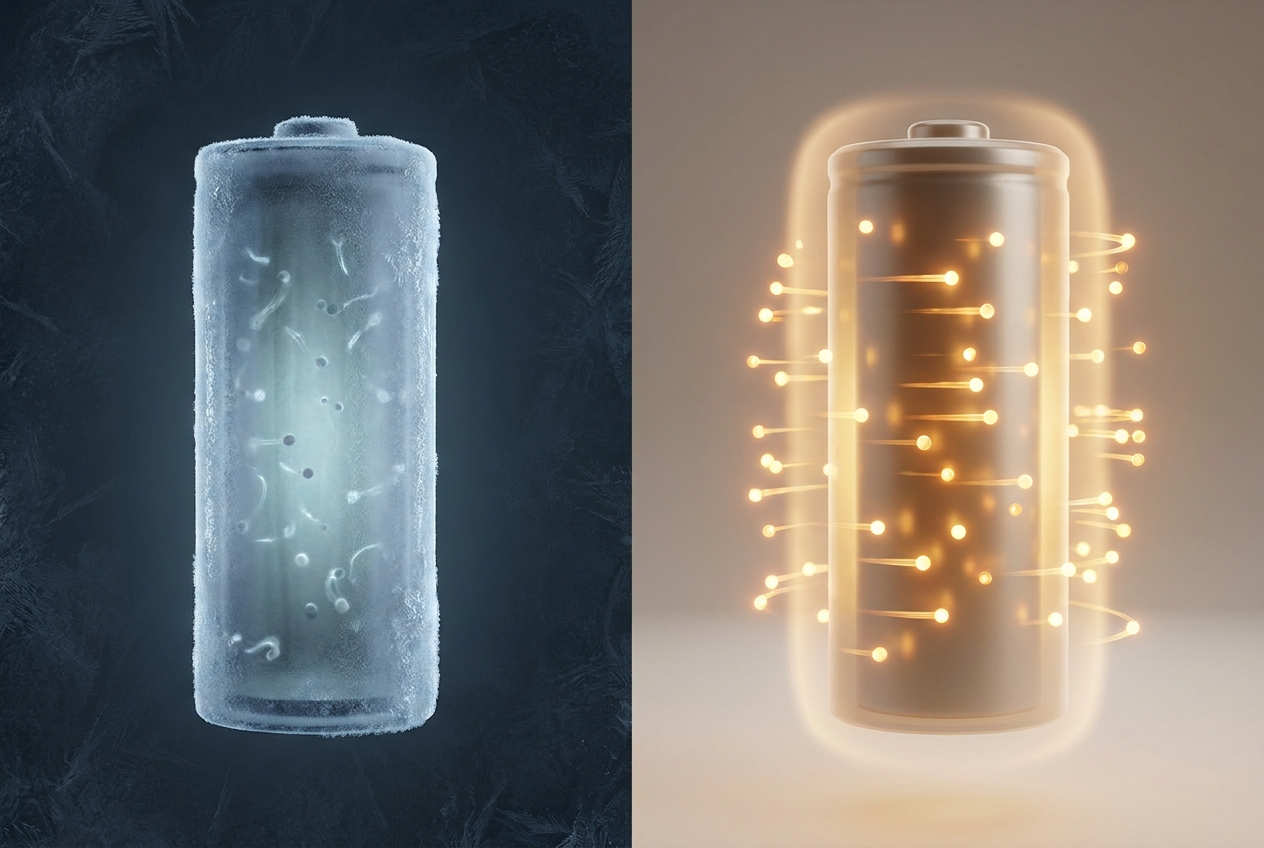
The chemistry inside a lithium-ion cell is literally slower at low temperatures, the lithium ions move through the electrolyte more sluggishly, which reduces both the rate at which energy can be delivered (power) and the total amount that can be accessed before voltage drops to the cutoff point (capacity). This is why your EV's range estimate drops in winter, the battery isn't losing energy, it's temporarily less able to access it.
At high temperatures, the problem is different. Heat accelerates unwanted side reactions within the cell, reactions that don't store or release useful energy but instead permanently alter the electrode materials. Over time, repeated exposure to high temperatures causes the graphite anode to form a thicker, less effective protective layer (called the SEI layer) and causes cathode crystal structures to break down. Both effects reduce the battery's capacity permanently, which is what degradation actually is at a chemical level.
This is also why thermal management is so critical in EV design, and why liquid-cooled packs degrade more slowly than air-cooled ones. Maintaining the cells within their optimal temperature range during both charging and use is the most effective way to slow the natural degradation process.
Why fast charging accelerates degradation
Vehicles using DC fast charging less than 12% of the time averaged 1.5% annual degradation, while those exceeding 12% DC fast charging approached 2.5% annually.
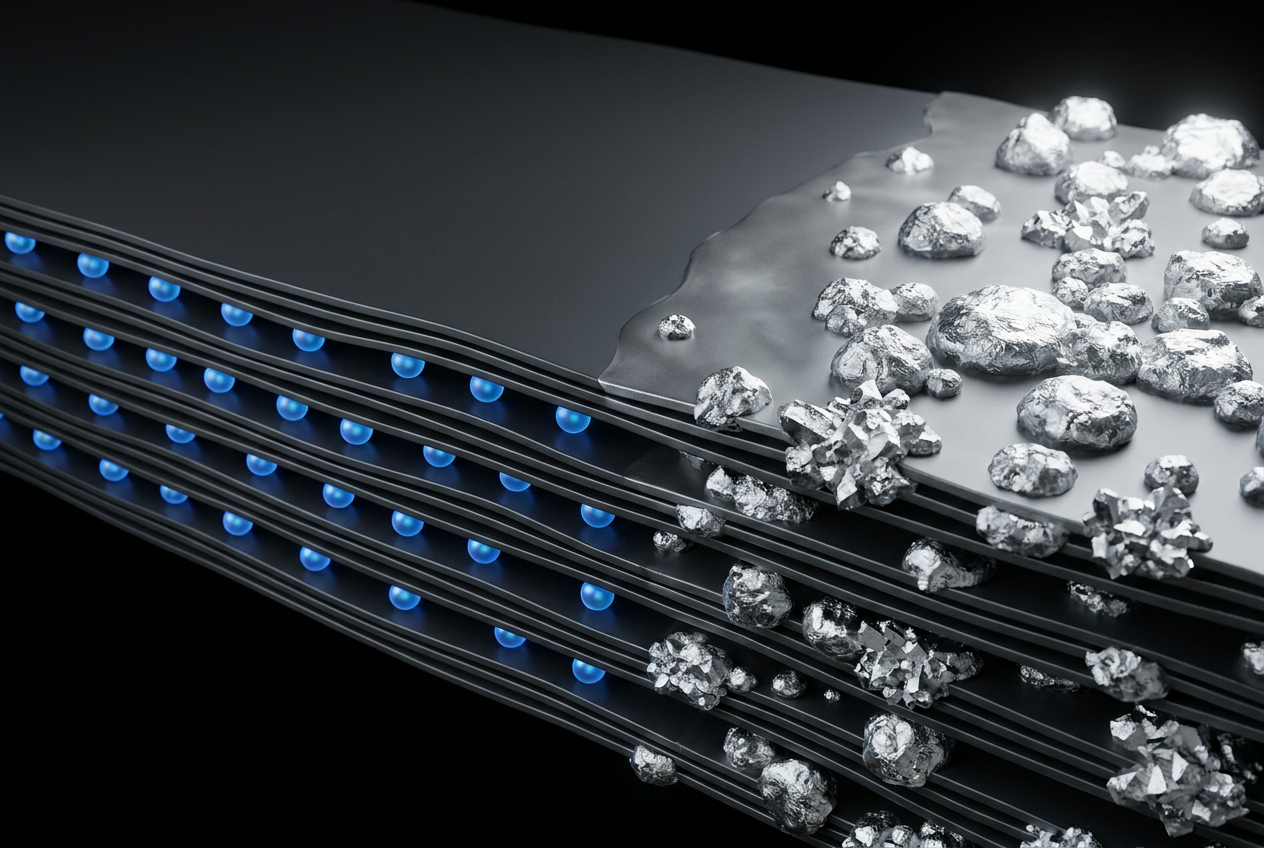
Fast charging pushes a high current into the battery over a short period. From a chemical perspective, this means driving lithium ions into the anode very rapidly, faster than the graphite structure can accommodate them gracefully. At high charge rates, lithium ions can form metallic lithium deposits on the anode surface (called lithium plating) rather than intercalating properly into the graphite layers. These deposits are electrochemically inactive, permanently reducing capacity, and in extreme cases can cause internal short circuits.
The tapering of charge speed above 80% state of charge that all EVs exhibit isn't a limitation of the charger, it's the battery management system deliberately reducing current to protect against lithium plating as the anode approaches full occupancy. It's the battery protecting itself.
Regenerative braking: charging in reverse
When you slow down or step on the brakes, the excess kinetic energy produced by the EV results in the flow of lithium ions from the anode to the cathode, so that more energy is stored.
Regenerative braking reverses the discharge process, the motor acts as a generator, producing electrical current that the inverter converts back to DC and uses to push lithium ions back from cathode toward anode, partially recharging the cell. The current levels involved in regenerative braking are typically much lower than DC fast charging, which is why regen is gentle on the battery and doesn't contribute meaningfully to degradation.
How long does this chemistry last?
Geotab's 2025 analysis of over 22,700 EVs found an average annual degradation rate of 2.3%, meaning a typical battery retains approximately 81.6% of original capacity after eight years. For many owners, this translates to a lifespan exceeding the vehicle's service life.
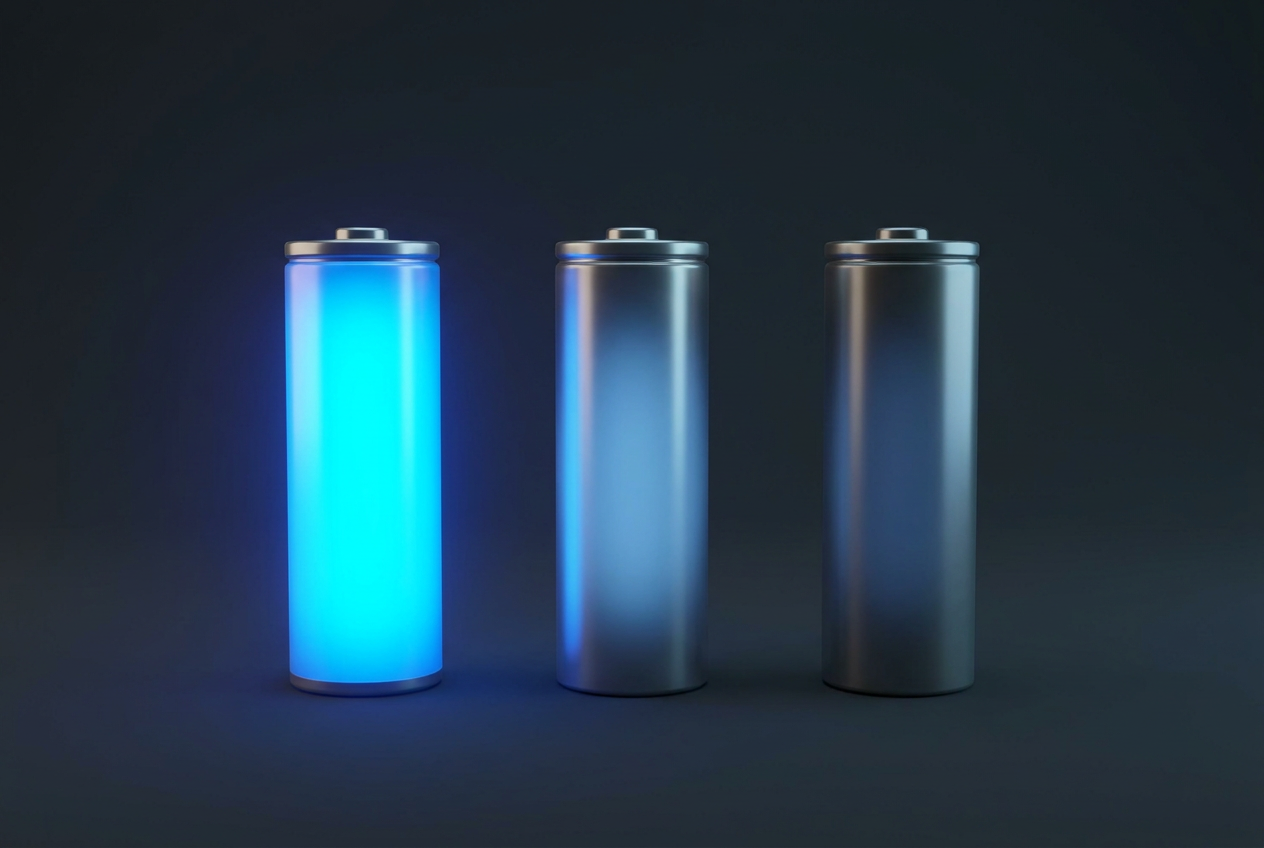
The chemistry in a well-managed lithium-ion battery can cycle hundreds of times before meaningful capacity loss occurs, LFP chemistries are rated for 3,000–5,000 full cycles, while NMC typically achieves 1,500–2,500. In everyday driving, where a full charge cycle might take several days, this translates to many years of useful service before the battery reaches the typical warranty threshold of 70–75% remaining capacity.
The most important variables for longevity are consistent with what the chemistry tells us: moderate charging rates, avoiding extremes of temperature, not regularly charging to 100% on NMC chemistry, and not letting the battery sit at very low state of charge for extended periods. None of these require significant lifestyle changes, they're simply good habits that align with how the chemistry works best.
Disclaimer
The content in this post is based on our own research, experience, and publicly available scientific and industry information and is intended for general informational purposes only. It does not constitute professional technical advice. Specific degradation rates, temperature ranges, and performance figures vary between battery chemistries, vehicle makes, and individual usage patterns. We encourage readers to consult manufacturer documentation and qualified professionals for model-specific guidance.
Target keywords: how do EV batteries store energy, how does a lithium ion battery work, EV battery energy storage explained, lithium ion battery electrochemistry explained