What's the difference between LFP, NMC, and NCA batteries in electric vehicles? Here's what each chemistry means for range, longevity, charging habits, and which NZ-available EVs use which.
A few years ago, most EV buyers didn't need to think about battery chemistry. You bought the car, you charged it, it worked. But as the market has matured and more options have appeared at different price points, battery chemistry has become one of the most practically useful things to understand, because it affects how you should charge, how the battery ages, what range you can expect in cold weather, and how long the pack is likely to last.
| This guide explains the three main chemistries you'll encounter in the New Zealand EV market, what each means in practice, and how to use that knowledge when choosing between vehicles. |
 |
A quick note on how battery chemistry works
All mainstream EV batteries are lithium-ion based, meaning they use lithium ions moving between a positive electrode (cathode) and a negative electrode (anode) to store and release energy. The chemistry refers primarily to the cathode material, which is where the significant differences between battery types emerge.
Different cathode materials produce different trade-offs: some store more energy per kilogram, others are more thermally stable, some last longer through more charge cycles, and some are simply cheaper to manufacture. Understanding these trade-offs is what separates a good battery purchase decision from a lucky one.
NMC — Nickel Manganese Cobalt
NMC (lithium nickel manganese cobalt oxide) has been the dominant chemistry in premium and long-range EVs for the past decade. It's the chemistry in most Tesla models (alongside NCA, more on that shortly), most Hyundai and Kia EVs, and many European-brand vehicles.
The defining characteristic of NMC is high energy density, more energy stored per kilogram than any other mainstream chemistry. This is why the longest-range EVs almost universally use NMC. More energy per kilogram means a lighter pack for the same range, or more range from the same size pack.
Key characteristics:
- Energy density: High, approximately 200–300 Wh/kg at cell level for modern NMC formulations
- Cycle life: Typically 1,500–2,500 full charge cycles before significant degradation
- Cold weather performance: Good, NMC performs better in cold conditions than LFP, with typical winter range loss of around 15–25%
- Fast charging: Generally accepts high charge rates well, especially on 800V platforms
- Cost: More expensive than LFP, approximately $100–120 per kWh at cell level in 2025 (BloombergNEF)
- Safety: More prone to thermal runaway than LFP if the battery is severely damaged or abused, requires robust thermal management
Charging habits matter with NMC: Unlike LFP, NMC batteries age faster when regularly charged to 100%. Most manufacturers recommend keeping daily charging to 80–90% to reduce long-term degradation. Many NMC vehicles have a default charging limit of 80% that owners need to actively override for longer trips.
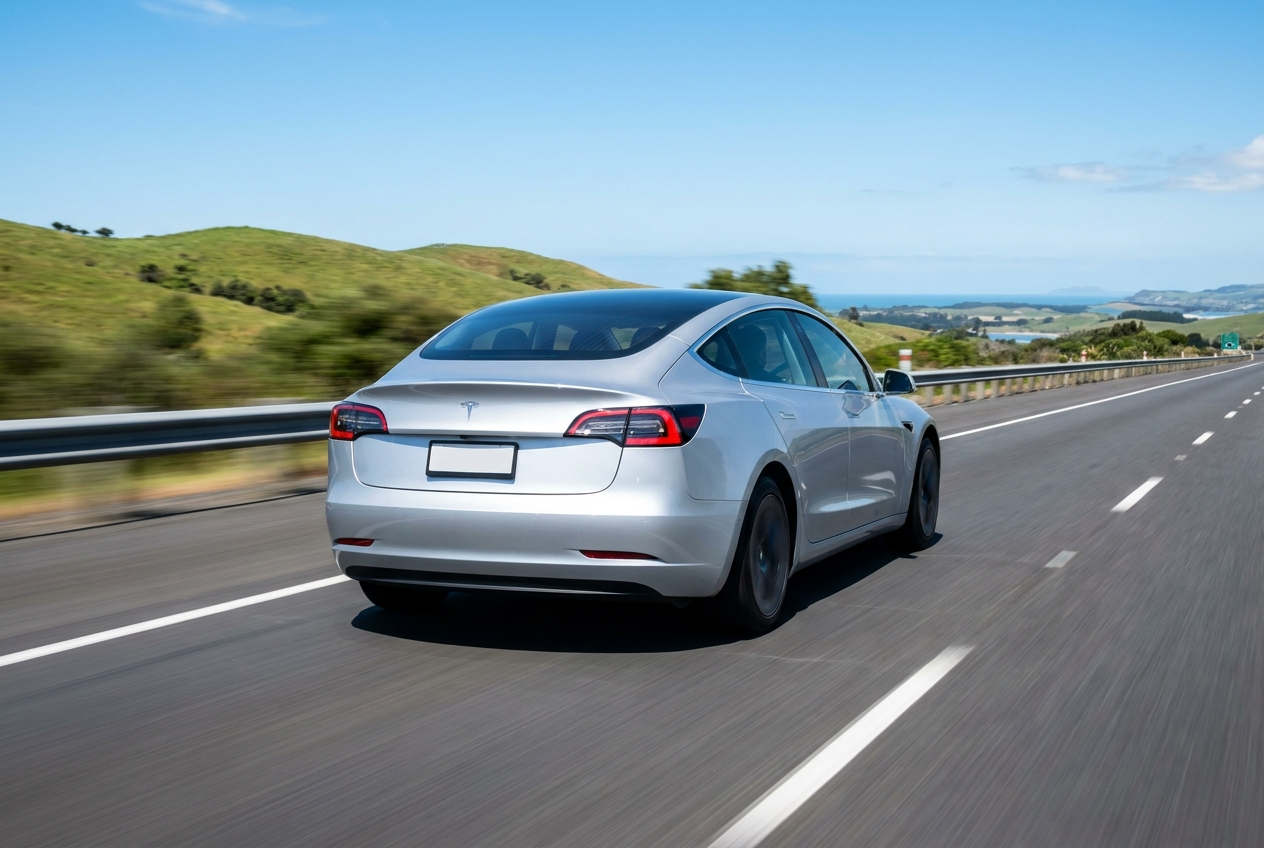
In the NZ used market: Nissan Leaf (40kWh and 62kWh use NMC), Hyundai Ioniq 5, Kia EV6, Tesla Model 3 Long Range and Performance, BMW iX, Polestar 2, Mercedes EQC.
| Best for: Drivers who regularly cover long distances, those who frequently use public fast chargers, buyers who need maximum range from a given pack size, and those in areas with colder winters where battery performance matters more. |
 |
LFP — Lithium Iron Phosphate
LFP (lithium iron phosphate) is the chemistry that has reshaped the EV market over the past three to four years. From accounting for just 10% of the global EV battery market in 2020, LFP held nearly 50% of global EV battery capacity by 2025, a dramatic shift driven primarily by Chinese manufacturers who perfected LFP production at scale.
The key appeal of LFP is its combination of safety, longevity, and cost. The olivine crystal structure of the iron phosphate cathode is extremely stable under heat and electrical stress, making it significantly more resistant to thermal runaway than NMC. It's also cheaper to produce, because it contains no cobalt and less nickel. And it lasts longer: typical LFP batteries are rated for 3,000–5,000 full charge cycles before significant degradation, compared to 1,500–2,500 for NMC.
Key characteristics:
- Energy density: Lower than NMC, approximately 130–160 Wh/kg at cell level. This means heavier packs for the same range, or shorter range from the same size pack
- Cycle life: Excellent, 3,000 to 5,000 full charge cycles before dropping to around 80% capacity
- Cold weather performance: More affected by cold than NMC, expect 25–35% range loss in cold conditions
- Cost: Cheaper, approximately $80–90 per kWh at cell level in 2025, 15–25% less than NMC at pack level
- Safety: Excellent, the most thermally stable of the mainstream chemistries
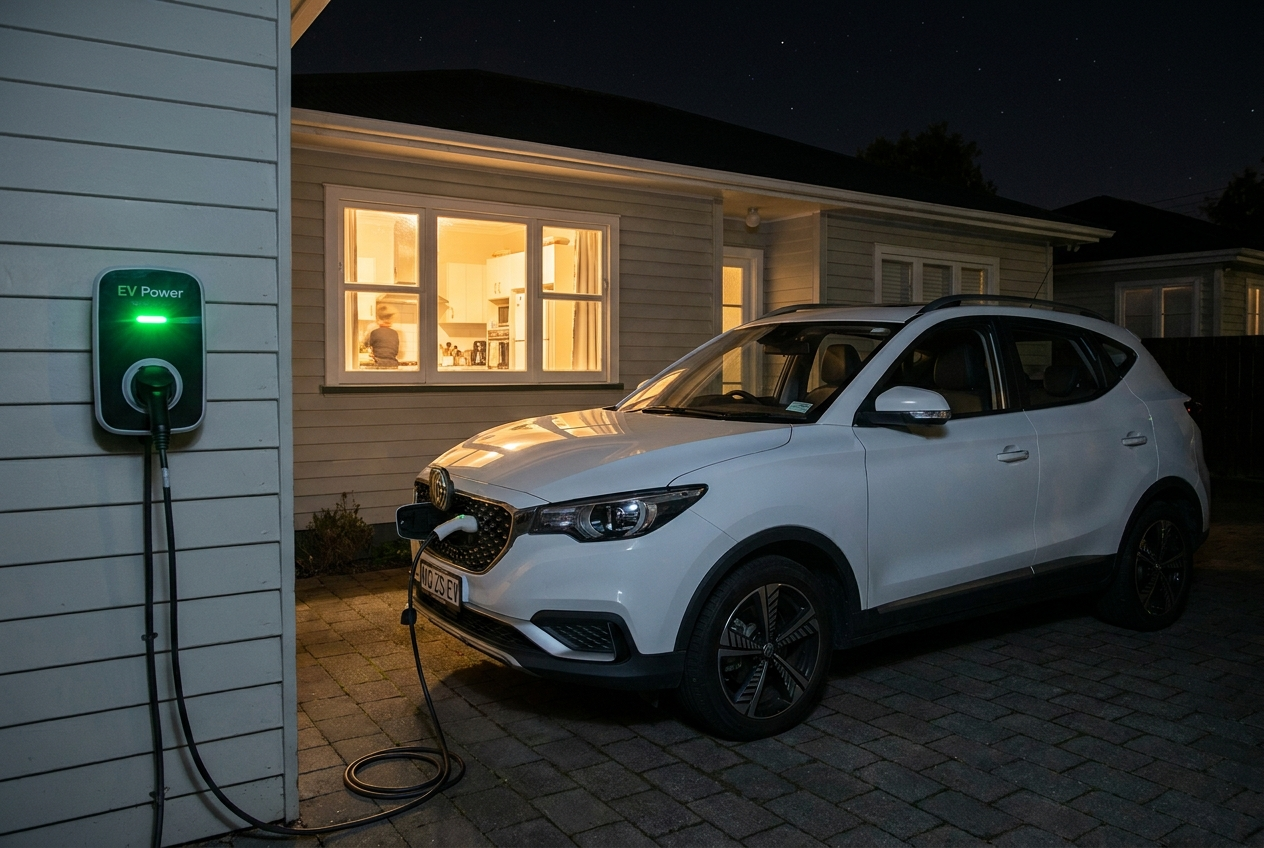
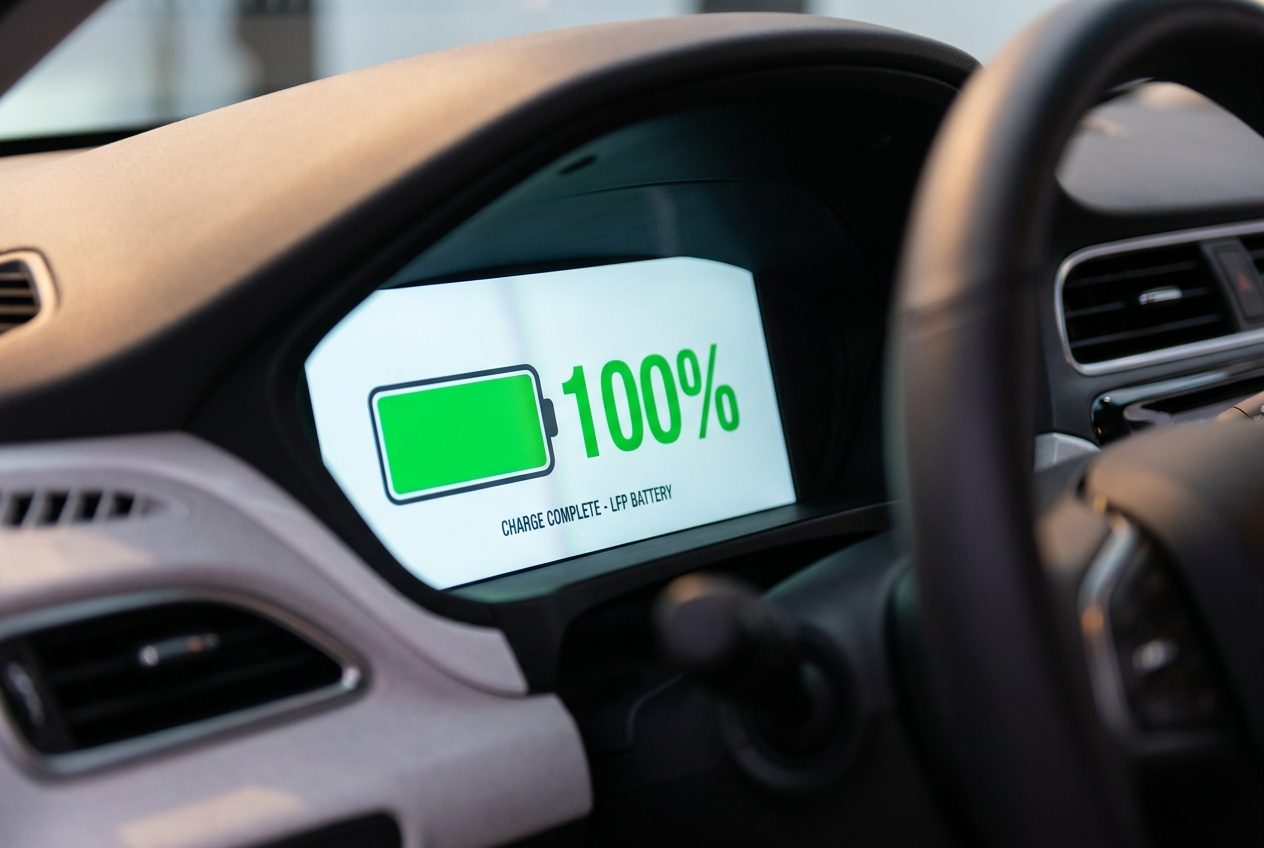
Charging habits with LFP are refreshingly simple: Unlike NMC, LFP batteries are happy being charged to 100% regularly. Many manufacturers (BYD, Tesla on LFP Standard Range models) explicitly recommend charging to 100% daily. No need to micromanage charge limits. This is a genuine practical advantage for daily commuters.
State of charge accuracy: LFP batteries have a flatter discharge curve than NMC, which means the dashboard range estimate can be less precise, particularly in the middle of the charge range. This is a known characteristic, not a fault.
In the NZ used market: Tesla Model 3 Standard Range (2021 onwards uses LFP), BYD Atto 3, BYD Seal, MG4 (standard range), some MG ZS EV variants.
| Best for: Daily commuters who charge at home overnight, buyers prioritising longevity and low maintenance, those who want the simplest possible charging routine, and budget-focused buyers where price per kWh matters. |
 |
NCA — Nickel Cobalt Aluminium
NCA (lithium nickel cobalt aluminium oxide) is closely related to NMC but replaces manganese with aluminium. The result is the highest energy density of any mainstream EV chemistry — which is why it was Tesla's original chemistry of choice, and why it still features in Tesla's highest-performance models (produced in partnership with Panasonic).
NCA offers more energy per kilogram than NMC, but at the cost of the most demanding thermal management requirements and higher sensitivity to charging abuse. It also has the shortest cycle life of the three mainstream chemistries when not managed carefully.
Key characteristics:
- Energy density: Highest of the three, enables maximum range from a given pack size
- Cycle life: Shorter than both NMC and LFP, typically 1,000–1,500 cycles without careful management; extended significantly by Tesla's battery management software
- Cold weather: Good performance in cold conditions
- Cost: High, comparable to or above NMC
- Safety: Requires the most sophisticated thermal management of any mainstream chemistry
In practice: NCA's real-world performance in Tesla vehicles has been excellent, largely because Tesla's battery management system is designed around the chemistry's specific needs. The combination of liquid cooling, sophisticated charge management, and careful BMS calibration has allowed NCA packs to perform well beyond what the raw cycle life figures might suggest.
In the NZ used market: Tesla Model S, Model X, and older Model 3 Long Range/Performance variants. Less prevalent in the used market under $30,000, NCA is primarily a premium segment chemistry.
| Best for: Buyers who need maximum range and are prepared to pay a premium; those who prioritise performance above all other factors. |
 |
LMFP — The bridge chemistry emerging now
|
Worth a brief mention: LMFP (lithium manganese iron phosphate) is an evolution of LFP that adds manganese to the cathode structure. The result is higher energy density than standard LFP, closing roughly half the gap between LFP and NMC, while retaining much of LFP's safety and longevity advantages.
CATL and BYD are both commercialising LMFP chemistry now, and it is beginning to appear in vehicles entering the market in 2025–2026. It represents a meaningful step forward for the LFP family and is worth knowing about when evaluating newer-generation used EVs over the coming years.
|
 |
How to use this when choosing a used EV in NZ
|
"I drive mostly in the city and charge at home" LFP is almost certainly the better choice. Charge to 100% daily without concern, enjoy a lower purchase price, and benefit from a battery that will outlast most other components of the vehicle. The range trade-off is irrelevant if your daily distance is under 80–100km.
"I regularly drive long distances, Auckland to Hamilton, Wellington to Palmerston North" NMC's higher energy density and better fast-charging characteristics make it more suited to frequent long-distance driving. The range buffer matters, and the ability to fast-charge efficiently en route is more important.
"Cold climate matters to me (South Island, high altitude, Waikato winters)" NMC handles cold better than LFP. If you regularly drive in temperatures below 5°C, the 10–15% additional cold-weather range NMC preserves over LFP is a practical consideration.
"I want the lowest total cost of ownership over 7+ years" LFP's superior cycle life and lower purchase price make it the logical choice for buyers planning to keep the vehicle long-term. The chemistry is simply more durable through more charge cycles.
|
 |
A practical quick-reference guide
| Chemistry |
Energy density |
Cycle life |
Cold weather |
Charge to 100%? |
Best use case |
| LFP |
Lower |
3,000–5,000 cycles |
↓ More impact |
Yes — recommended |
City commuting, home charging, longevity |
| NMC |
High |
1,500–2,500 cycles |
↓ Less impact |
No — limit to 80% |
Long range, fast charging, cold climates |
| NCA |
Highest |
1,000–1,500 cycles |
↓ Less impact |
No — manage carefully |
Maximum performance, premium segment |
| LMFP |
Medium-high |
Similar to LFP |
TBC |
Yes (likely) |
Emerging — watch this space |
Battery chemistry is one of the most important but least-discussed factors in EV ownership. Knowing what's inside your vehicle, and what that means for how you charge and how long the pack will last, turns you from a passive user into an informed owner.
| For a deeper look at what comes next in battery technology, read our guide to next-generation EV batteries. Or if you'd like help assessing the battery chemistry and health of a specific vehicle before purchase, our team offers professional EV inspections across New Zealand. |
 |
Disclaimer
The content in this post is based on our own research, experience, and opinion and is intended for general informational purposes only. It does not constitute professional financial, technical, or legal advice. While we strive for accuracy, figures, regulations, and specifications referenced — including pricing, RUC rates, battery data, and technology timelines — are subject to change and may vary by circumstance. We encourage readers to conduct their own research and consult qualified professionals before making any significant purchasing or financial decisions. External links and references are provided for convenience and do not constitute endorsement.
Last updated: June 2026