Know the warning signs that your EV needs attention. From range drops to warning lights and unusual behaviour, here's what NZ EV owners should watch for
Electric vehicles are simpler and more reliable than petrol cars, but they still give signals when something needs attention. Knowing what to look for can mean the difference between a straightforward service and a costly repair.
Here are the warning signs every New Zealand EV owner should be able to recognise.
|
 |
1. Your range has dropped noticeably
A gradual, steady reduction in range over several years is normal battery degradation, that's expected. What you should act on is a sudden or unexplained range drop that doesn't match the pattern of normal wear.
If your EV used to comfortably do 280km on a full charge and now struggles to reach 220km in similar conditions, that's worth investigating. It could indicate:
- Accelerated battery degradation
- A fault in the battery management system
- An issue with one or more individual battery cells
- A software issue affecting the state-of-charge estimate
Don't ignore a sudden range change. Get a battery diagnostic done by a qualified EV technician who can read detailed cell-level data.
Also check: Cold weather reduces range on all EVs, typically 15–25% in winter conditions. If your range drop is season-specific, that's normal. If it persists through warmer months, it's worth a check.
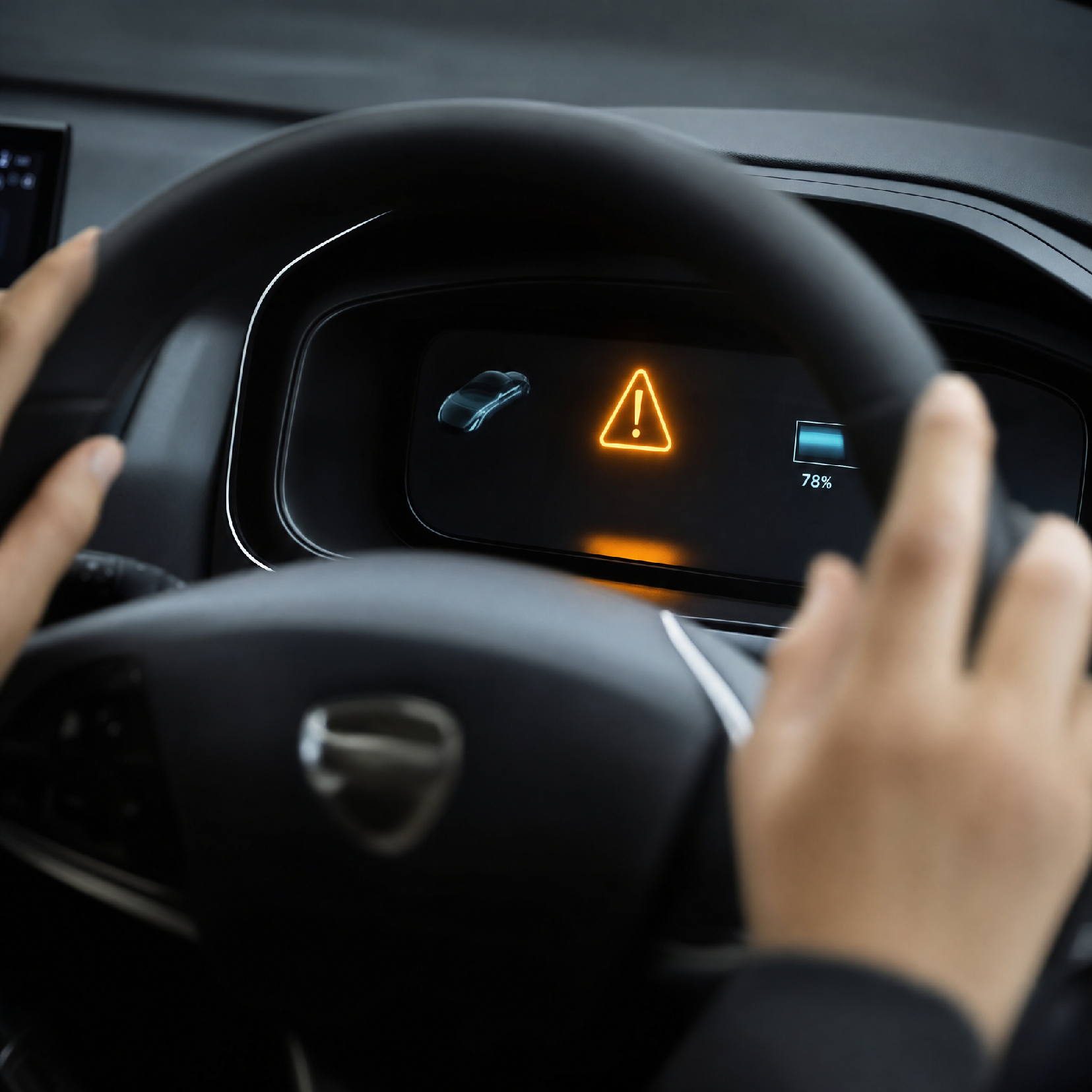
2. Warning lights on the dashboard
Modern EVs have multiple warning systems monitoring battery health, charging, motor, and safety systems. Any warning light on the dashboard should be taken seriously.
Warning lights that need prompt attention:
- Orange/red battery warning light: Indicates an issue with the high-voltage battery system. Don't ignore this. Book a diagnostic immediately.
- Charging system warning: A fault in the onboard charger or charging port. Stop using public fast chargers until assessed.
- Turtle mode indicator: Many EVs limit power severely when the battery reaches a critically low charge or detects a fault. If this activates unexpectedly (not just at very low SOC), get it checked.
- Check EV system / powertrain warning: A general fault in the electric drive system. Could be minor or significant — a diagnostic will clarify.
- 12V battery warning: The auxiliary 12V battery powers your car's electronics and systems startup. If this fails, the vehicle may not start.
When in doubt, refer to your owner's manual for the specific meaning of any warning light. If it's red, treat it as urgent.
3. Unusual noises
EVs are quiet vehicles, which makes unusual noises easier to identify. Common sounds that warrant a service booking:
Humming or whining from the motor: Some electric motor noise is normal at certain speeds. A new, continuous, or changing hum, particularly at low speeds, could indicate motor bearing wear.
Clicking or knocking from suspension: Particularly noticeable over bumps or when turning. EVs are heavier than equivalent petrol cars due to battery weight, which can accelerate suspension wear. Clunking or knocking should be inspected promptly.
Grinding when braking: While EV brakes last longer than petrol car brakes, neglected rotors can develop surface corrosion from underuse resulting in a grinding sensation when braking. Brake fluid should also be replaced every two years regardless of pad condition.
High-pitched noise from under the bonnet while charging: Some noise during charging is normal (cooling fans). Loud or unusual sounds during a charging session could indicate a charger fault.
4. Charging problems
Issues with charging are a common reason NZ EV owners contact a service centre. Watch for:
Charging stops before reaching your set target: If your vehicle consistently stops charging at 80% when set to 100% (or similar), it could be a battery management system issue or a fault in individual cells.
Unusually slow charging from a known fast charger: If a charger that used to add 100km of range in 20 minutes now takes much longer, the fault may be in the vehicle's DC charge acceptance rather than the charger itself.
Charging port won't latch or unlock: Mechanical issues with the charge port door or locking mechanism are relatively common and straightforward to repair, but should be dealt with promptly to avoid being stranded.
Error messages during charging: Any recurring error message during charging sessions should be logged and reported to a technician.
5. Changes in brake feel
EV brakes work differently to petrol car brakes. Regenerative braking does most of the slowing in normal driving, meaning the friction brakes are used primarily for hard stops.
This is generally a benefit, brake pads last much longer. But it can cause a problem: rotors that are rarely used can develop surface rust and corrosion, particularly in New Zealand's coastal or wet environments.
Signs of brake issues to watch for:
- A metallic grinding sensation when braking, particularly after the vehicle has sat unused for a few days
- Vibration through the brake pedal
- The vehicle pulling to one side when braking
- Increased stopping distances
- Brake warning light
Brake fluid should be replaced every two years on EVs, even if pad wear is minimal. Brake fluid absorbs moisture over time, which can cause corrosion inside the system and reduced performance.
6. The 12V battery is weak
This is one of the most commonly overlooked maintenance items on EVs. The 12V auxiliary battery is separate from the main traction battery and powers all the electronics, lighting, and the systems that wake up the main battery.
Signs of a weakening 12V battery:
- Slow or delayed response when opening the car with your key fob
- Accessories behaving strangely (windows slow, mirrors slow)
- Vehicle takes longer than usual to "wake up" when you approach it
- Error messages relating to auxiliary power or 12V system
12V batteries in EVs typically last 3–5 years. Replacement is relatively inexpensive ($150–$300) and straightforward, but a failed 12V battery can leave you unable to start the vehicle.
7. Software or connectivity issues
EVs are software-driven vehicles, and software faults can affect everything from range estimates to charging behaviour to driver assistance systems.
Signs that a software issue may need attention:
- Range estimate wildly inconsistent or clearly inaccurate
- Infotainment system freezing or rebooting unexpectedly
- Driver assistance features (lane keep, adaptive cruise) behaving erratically
- Over-the-air update failures
Many software issues can be resolved by a qualified technician with manufacturer access tools. Some may be covered under warranty even for older vehicles.
When was your EV last serviced?
As a rule of thumb, most EVs should be serviced annually or every 15,000km / whichever comes first. If it's been more than 12 months since your last service, or if you've noticed any of the symptoms above, it's time to book in.
Our GVI Service Centre team specialises in electric vehicle servicing in New Zealand. We use EV-specific diagnostic equipment and employ technicians with high-voltage vehicle qualifications, so your EV is in expert hands.
Get in touch to book a service, or use our online booking tool to find a time that works for you.
The content in this post is based on our own research, experience, and opinion and is intended for general informational purposes only. It does not constitute professional financial, technical, or legal advice. While we strive for accuracy, figures, regulations, and specifications referenced — including pricing, RUC rates, battery data, and technology timelines — are subject to change and may vary by circumstance. We encourage readers to conduct their own research and consult qualified professionals before making any significant purchasing or financial decisions. External links and references are provided for convenience and do not constitute endorsement.
Last updated: June 2026