Worried about running out of charge in your EV? Here's exactly what happens, how much warning you get, why you can't flat-tow an EV, and what to do if you're stranded in NZ
It's the fear that stops more people buying an EV than almost anything else: what happens if I run out of charge? For anyone used to the safety net of a jerry can of petrol, the idea of a flat battery on the side of the road feels genuinely alarming.
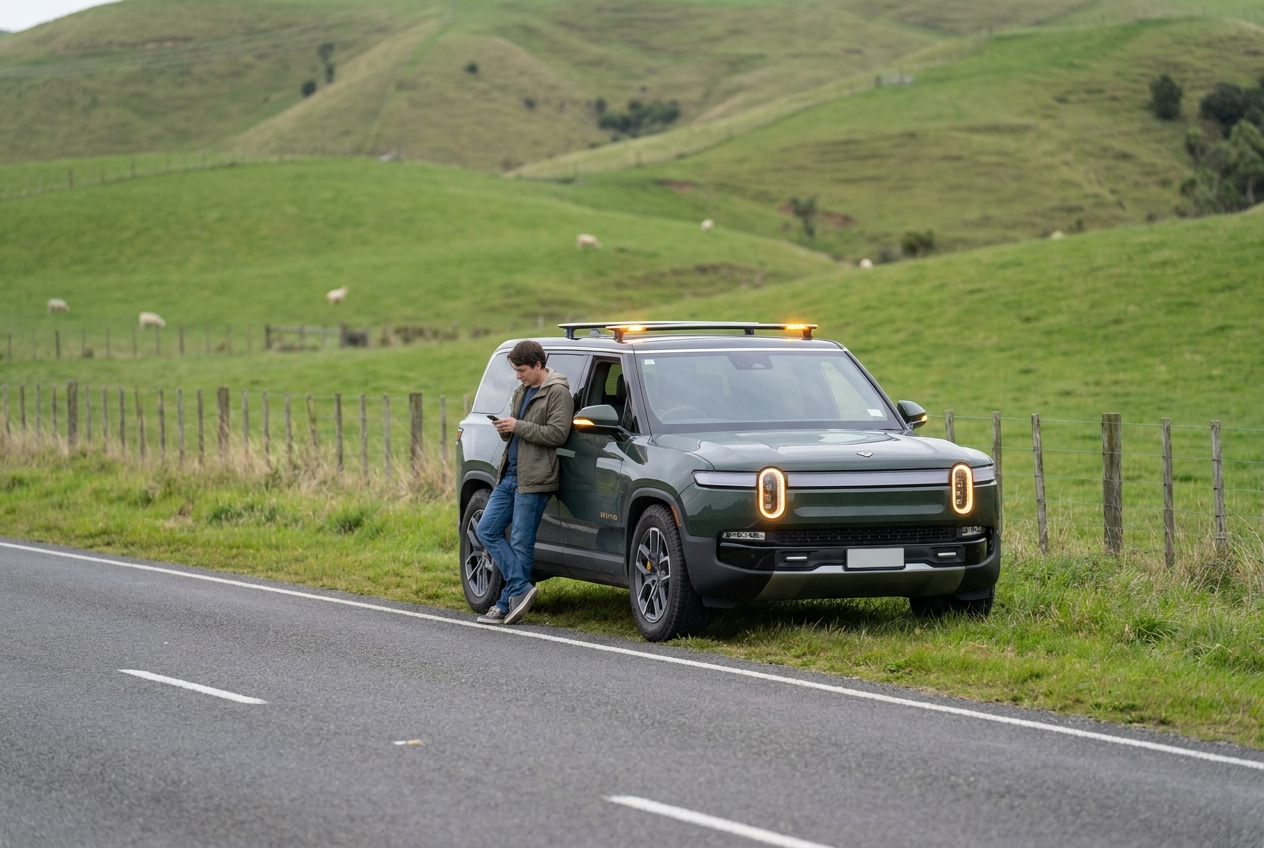
The good news is that running out of charge in a modern EV is far less dramatic, and far less likely, than most people imagine. Your car gives you plenty of warning, it protects itself as it winds down, and even at 0% there's usually a bit more in reserve than the display suggests. Here's exactly what happens, step by step, and what to do if it ever happens to you in New Zealand.
Your EV gives you lots of warning
Long before you're in any trouble, your EV starts telling you the battery is getting low, and it's much harder to ignore than a petrol car's fuel light.
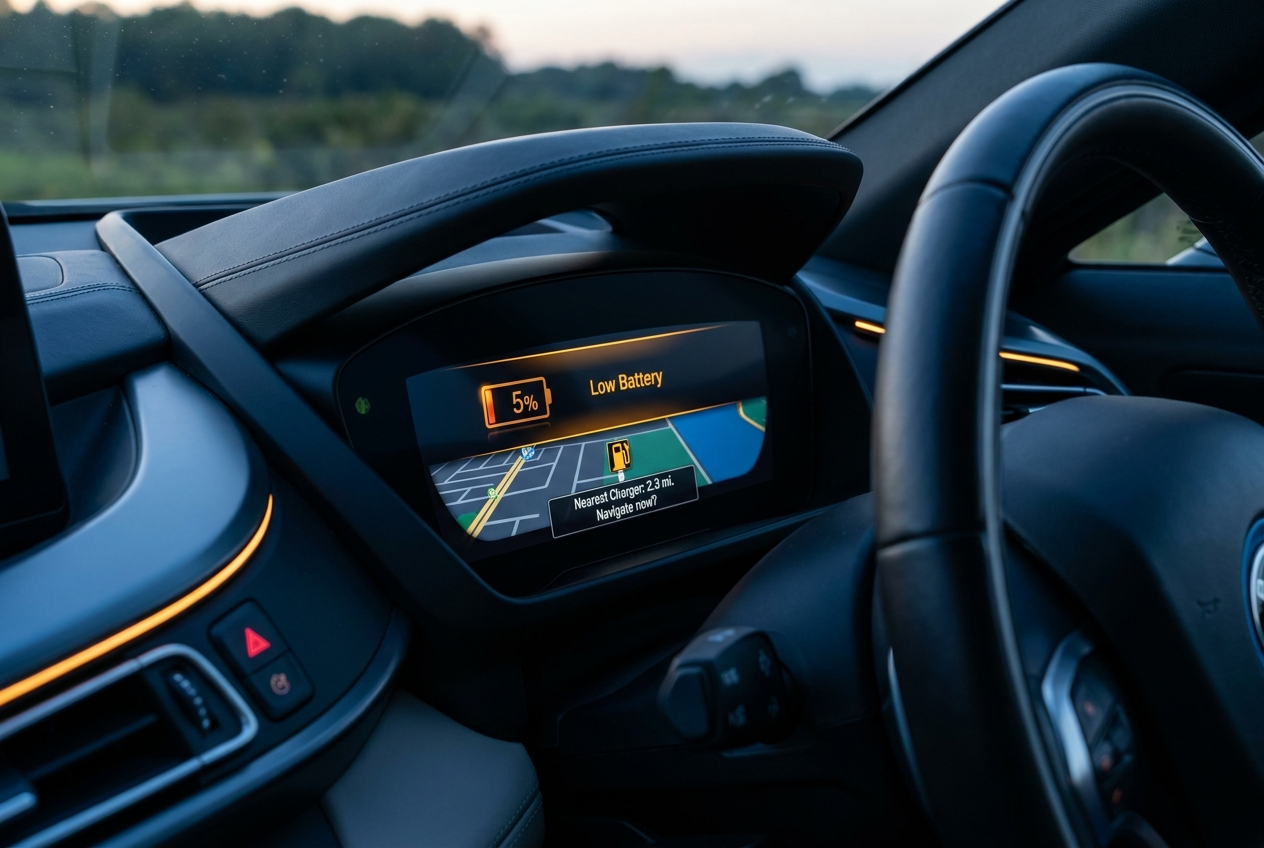
The industry-standard warning threshold for 2025/2026 models has shifted to around 8% for the initial low battery alert. At this point you'll typically get a visual warning and often an audible chime. As the charge continues to drop, the warnings escalate.
Once the state of charge drops to around 5%, most modern EVs initiate recomendations for you to find the nearest fast charger. In other words, the car doesn't just warn you it actively encourages you to find somewhere to charge before it's too late.
By this stage you've usually had multiple prompts across a reasonable distance of driving. Running out of charge in a modern EV almost always involves ignoring several clear warnings, not being caught out by surprise.
The "hidden buffer" below zero
Here's something most people don't realise: when your display hits 0%, the battery isn't actually empty.
Modern EVs include a sophisticated hidden buffer below the indicated zero. On average, a 2025 EV can travel an additional 5 to 7 kilometres after the display hits 0% before turtle mode fully initiates.
This buffer exists for two reasons: to protect the battery from the damage that comes with running a lithium-ion cell completely flat, and to give you a final margin to reach safety. It's a deliberate safety net, though not one you should rely on or treat as extra range to plan around.
Turtle mode: the car protecting itself
As the battery approaches genuine empty, your EV enters what's commonly called turtle mode, usually indicated by a turtle icon on the dashboard.
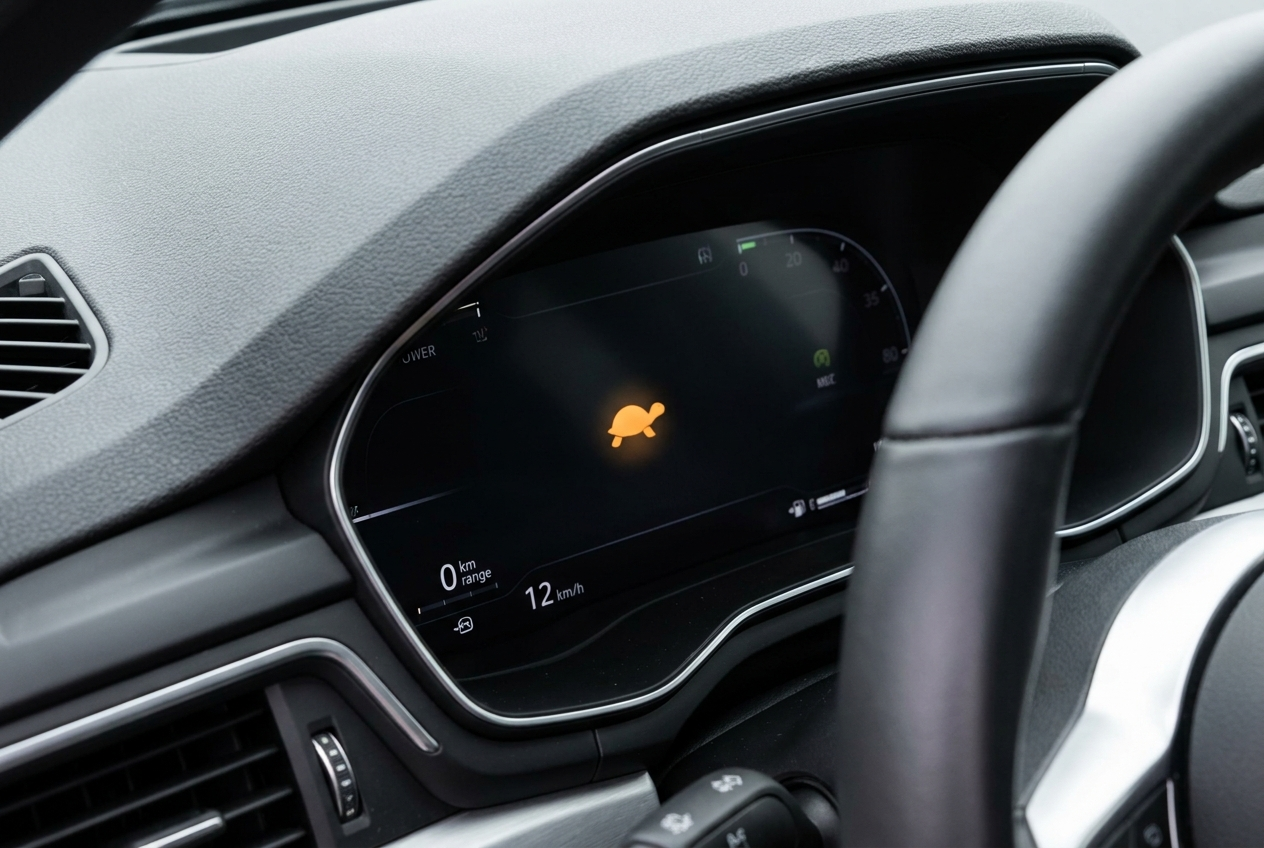
Turtle mode significantly reduces the vehicle's speed to conserve energy, allowing you to find a safe place to pull over. The car deliberately limits power output to eke out the last usable energy and protect the battery and power electronics from damage.
It may feel frustrating when turtle mode suddenly slows you down, but it's a sign the car is protecting the battery and power electronics, protection that helps preserve long-term battery health.
The safest way to think about turtle mode: you have minutes, not kilometres. When you see it, your job is to get somewhere safe, a side road, a car park, the shoulder, not to try to reach a charger that's still some distance away.
What happens when it finally stops
If you keep going through turtle mode, the EV will eventually come to a complete stop and won't drive any further until it has some charge.
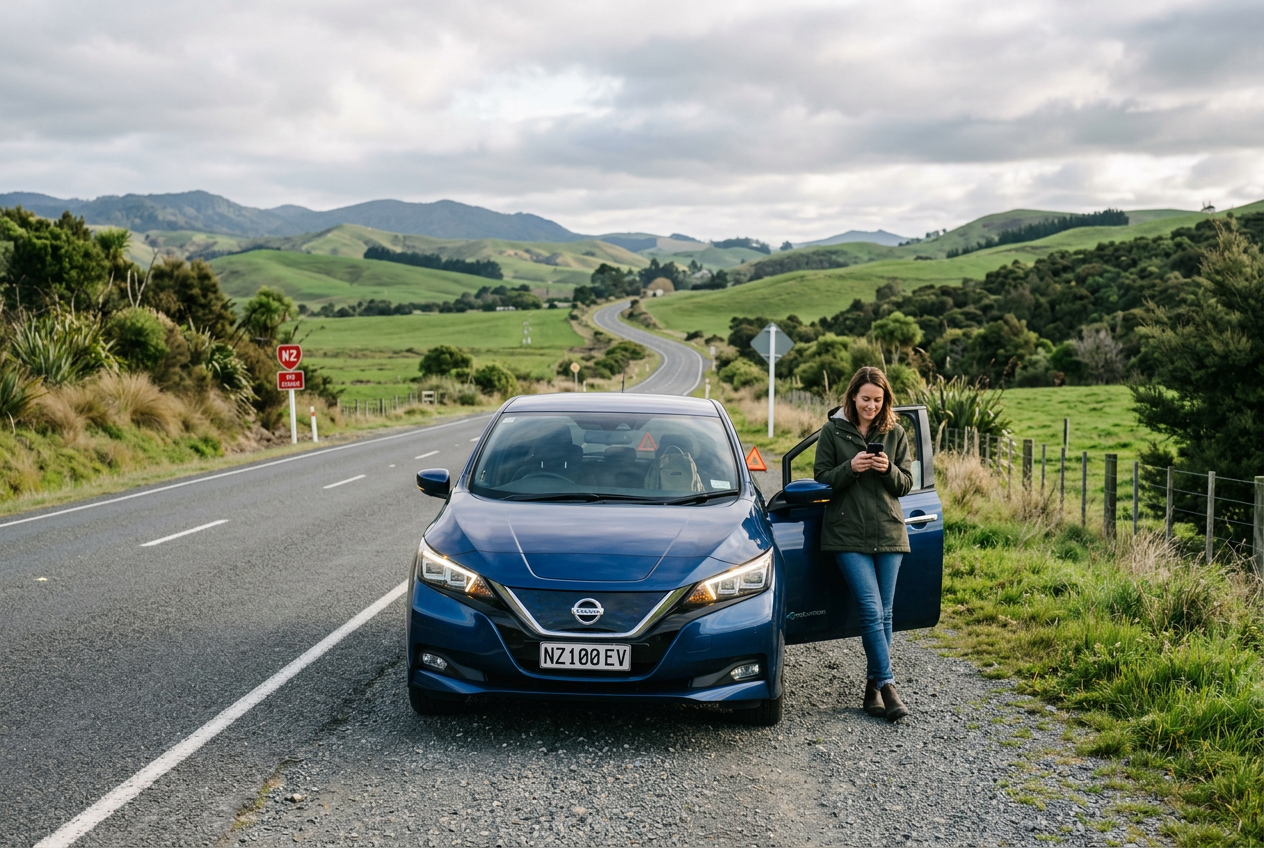
The final shutdown can be a little dramatic, the car will put itself into park to prevent it from rolling away. But a dead battery doesn't mean the car is suddenly a paperweight. Power windows, door locks, the parking brake, and your navigation system should still function for a while, just like a petrol-powered car.
That's because these systems run off the separate 12V auxiliary battery, not the main traction battery. You simply can't drive anywhere, but you can still operate the car's basic functions, put on your hazard lights, and call for help.
One important safety note: mechanical hydraulic brakes run on the 12V battery, so they always work. However, regenerative braking stops working, so you must press the brake pedal harder than usual. Keep this in mind in those final low-power moments.
Why you can't flat-tow an EV, this matters
This is the single most important thing to know if your EV ever stops, and it's where a well-meaning but uninformed tow operator can cause real damage.
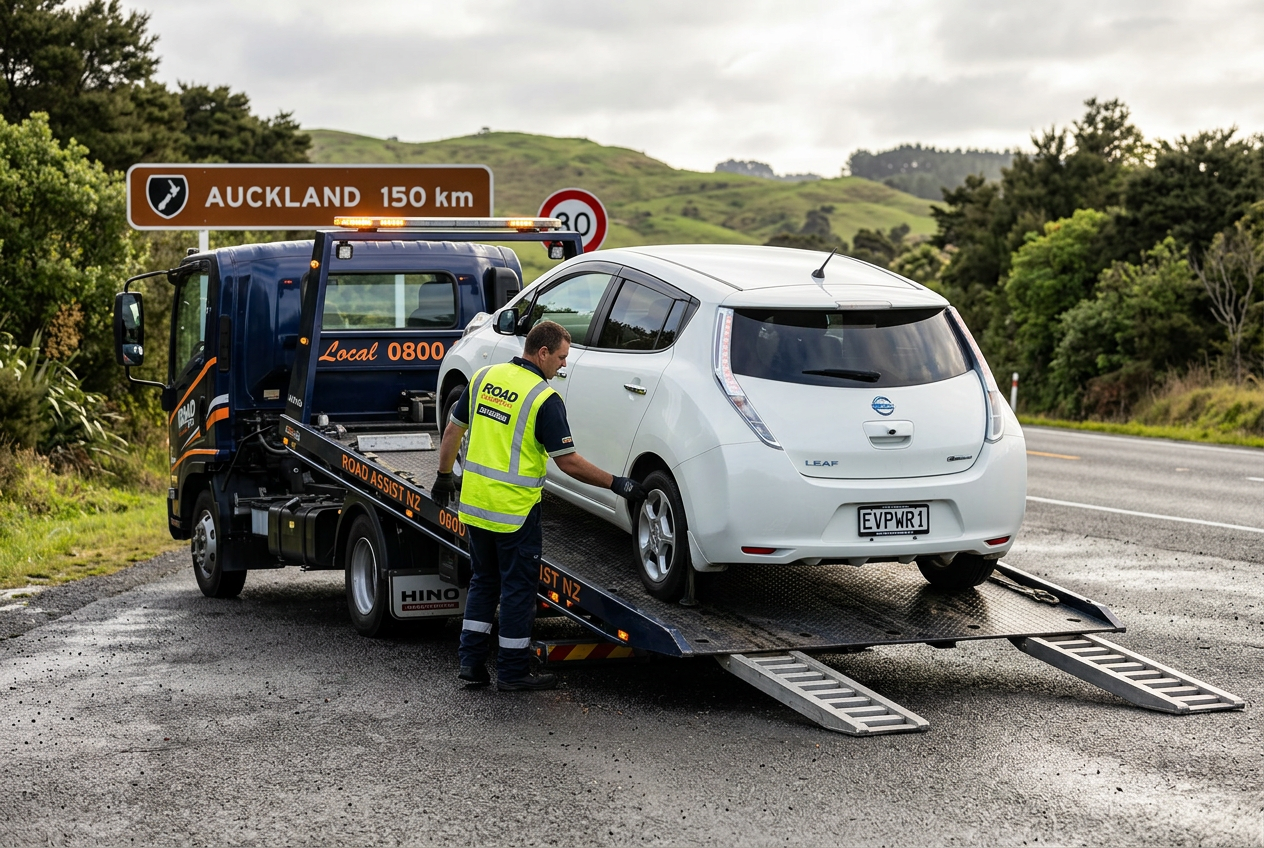
An EV must be transported on a flatbed truck. It cannot be towed the traditional way, with two wheels on the ground, the way you might tow a broken-down petrol car.
A regular tow truck lifts the front wheels off the ground while the back wheels stay on the road as the truck drives. This causes the electric motor to generate power and heat while the wheels spin, which can damage the motor itself. Because the wheels are mechanically connected to the electric motor, rolling them turns the motor into a generator, creating heat and electrical load with nowhere for the energy to go.
When you call for help, the single most important thing to say is that you drive an EV and you need a flatbed truck. Don't let anyone tow it with wheels on the ground, even a short distance, even if they insist it's fine.
If the car has put itself into park, there's a special service mode you can activate that will put the car into neutral so it can be pushed or pulled a short distance to manoeuvre it onto the flatbed. Your owner's manual explains how to activate this for your specific vehicle, worth reading before you ever need it.
What to do if you're stranded in NZ
If you do find yourself with a flat EV in New Zealand, here's the sequence:
- Get somewhere safe. As soon as turtle mode appears, pull over somewhere safe rather than pushing on toward a distant charger.
- Hazards on, stay visible. Your 12V systems keep the hazard lights working. On the open road, standard breakdown safety applies.
- Call roadside assistance and specify it's an EV. Whether it's AA Roadside Service, your insurer's roadside cover, or a manufacturer roadside programme, tell them clearly: it's an electric vehicle, it's out of charge, and you need a flatbed.
- Ask about mobile charging. Some roadside providers now offer mobile EV charging, a portable unit that gives you enough charge (often around 15 minutes' worth) to reach the nearest charging station under your own power, avoiding a tow altogether. It's worth asking your provider whether they offer this.
- Note the nearest charger. Your navigation system usually still works on the 12V system, so you can tell the flatbed operator exactly where to take you.
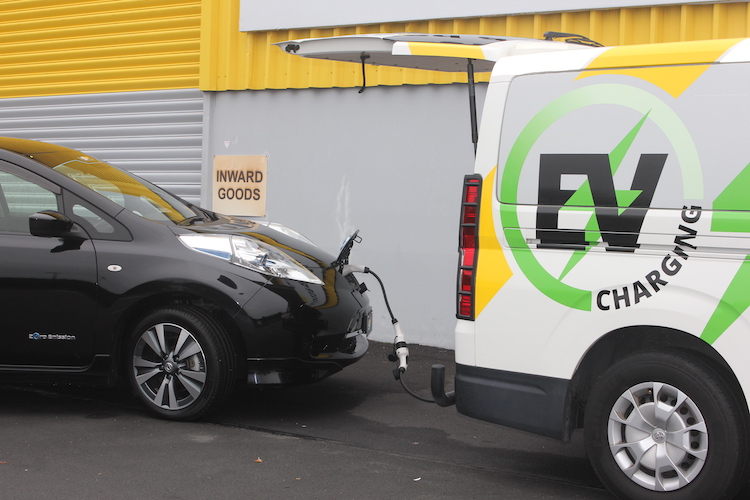
The AA offers roadside assistance across New Zealand and has been expanding its EV-specific support, including guidance on flatbed recovery for electric vehicles. It's worth confirming your roadside cover includes EV recovery before you need it. If you have purchased your EV from the team at GVI you will likely have their EV LIfe package that includes AA Road Side Assistance
How to make sure it never happens
The best way to handle running out of charge is to never get close to it. A few simple habits make it a non-issue:
Don't plan around 100% of your range. Aim to arrive with at least 10–15% charge. That margin protects you from headwinds, detours, or cold-weather losses that could otherwise push you into turtle territory.
Trust the car's route planning. Modern EVs and apps like PlugShare or PowerTrip and your vehicle's built-in navigation plan charging stops into longer trips automatically. Use them.
Charge to a comfortable buffer before long trips. Leaving home with a full charge before a big drive removes almost all the risk.
Remember cold weather cuts range. In winter, particularly in the South Island, factor in a 15–25% reduction and give yourself more margin.
Don't repeatedly restart the car to squeeze out more distance. Repeatedly shutting the car off and on to squeeze out a few extra metres can push the pack below safe voltage and may leave you fully stranded.
The bottom line
Running out of charge in an EV is genuinely uncommon, because the car works hard to stop it happening, escalating warnings, automatic rerouting to chargers, a hidden buffer below zero, and a protective turtle mode that gives you time to stop safely. And if the worst does happen, the fix is straightforward: pull over, call for a flatbed (never a standard tow), and you'll be back on the road once you've reached a charger.
For most owners, after a few weeks of driving an EV, range anxiety fades to about the same level of thought most people give their petrol gauge, a glance now and then, and otherwise not a concern.
Disclaimer
The content in this post is based on our own research, experience, and publicly available information and is intended for general informational purposes only. It does not constitute professional technical or roadside safety advice. Specific warning thresholds, buffer distances, and recovery procedures vary between vehicle makes and models. Always consult your vehicle's owner's manual and confirm the details of your roadside assistance cover. In a genuine breakdown, follow standard New Zealand road safety practice and the guidance of your roadside assistance provider.
Target keywords: what happens if EV runs out of charge, EV out of battery NZ, can you tow an EV NZ, EV turtle mode explained